
Happy New Year!
Alysa Liu brings joy; the dazzling Taipei Book Fair; Lorraine Daston visits Taiwan; and other things that give us hope in the Year of the Horse


Hello dear readers,
Albert and Michelle here. Happy Lunar New Year! We last wrote about our deep sense of paralysis at our current moment. We still feel unmoored, as there’s been so much bad news: the absurd geopolitical standoff between the US and the EU over Greenland; the violent occupation of Minnesota; the crackdown in Iran that left thousands dead; and the relentless, simmering military tension right here in the Taiwan Strait. Every time we’ve tried to start this newsletter in the past couple of weeks, we’ve felt at a loss.
But! Like almost all of social media, we’ve been transfixed by Alysa Liu. The quick primer, for those of you who don’t know: Liu became the youngest U.S. national champion in figure skating history in 2019, at just thirteen years old. She participated in the Beijing Winter Olympics in 2022, where she won a bronze medal in the team event — competing, remarkably, in the country her father had fled.
Alysa’s father, Arthur Liu, was a political dissident who took part in the 1989 Tiananmen Square protests before emigrating to the United States. He eventually settled in the East Bay, where he raised Alysa as a single father. In the lead-up to the Beijing Olympics, the Justice Department revealed that Arthur and Alysa had been targeted in a Chinese government-directed spying operation — part of a wider campaign to stalk and intimidate dissidents on American soil. One operative even posed as a sports official and called Arthur to try to obtain their passport numbers. He refused. And he refused to pull his daughter from the Games. “I’m not going to let them win — to stop me — to silence me from expressing my opinions anywhere,” he told the Associated Press.
After Beijing, the burnout hit. Liu stepped away from competitive skating.
Then she came back. And what has captivated since the comeback has been the way she skates. She has an infectious, almost defiant joy, a carefreeness, looseness, and expressiveness that feels nothing like the grim perfectionism that elite figure skating so often demands. She looks like she’s having fun out there, which in this sport is practically a revolutionary act.
And then — spoiler alert!! — she won gold. Her winning routine was transcendent and soaring. She’s the first American woman to win Olympic figure skating gold in 24 years.
There’s something about Liu that feels quintessentially East Bay (where we both lived and Michelle worked): the independence, the refusal to fit neatly into anyone’s narrative. This daughter of a dissident skates with the kind of freedom her father once marched for. It’s a good story. We can’t stop watching clips of her. Here’s a clip of her doing a promotional video for Bay Area public transit. (Yay public transit!!)
Here in Taipei, several events have also given us a sense of hope, among them a visit from the brilliant and generous historian Lorraine Daston and the Taipei Book Fair, a wondrous, dizzying event for booksellers, artists, activists, and editors from across the world.
Daston is a renowned historian of science and co-author of one of Albert’s favorite works of history, Wonders and the Order of Nature, 1150–1750. Earlier this month, she gave three lectures at the Institute of History and Philology as part of the Fu Ssu-Nien Lectures. Daston is, in industry parlance, the real deal. Across the lectures, she offered a masterful new reading of the history of empirical research and observation, pushing against much of our conventional thinking about how science and knowledge have been understood. She was constantly provocative, forcing us to revise assumptions we didn’t know we held. In the final session, she posed a question we haven’t stopped thinking about: what if a university were organized not around traditional disciplinary boxes but around shared modes of empirical research — grouping together, say, everyone who works in archives, or everyone who does fieldwork, or everyone who runs experiments? What new questions, observations, or conversations might emerge from those unexpected combinations?
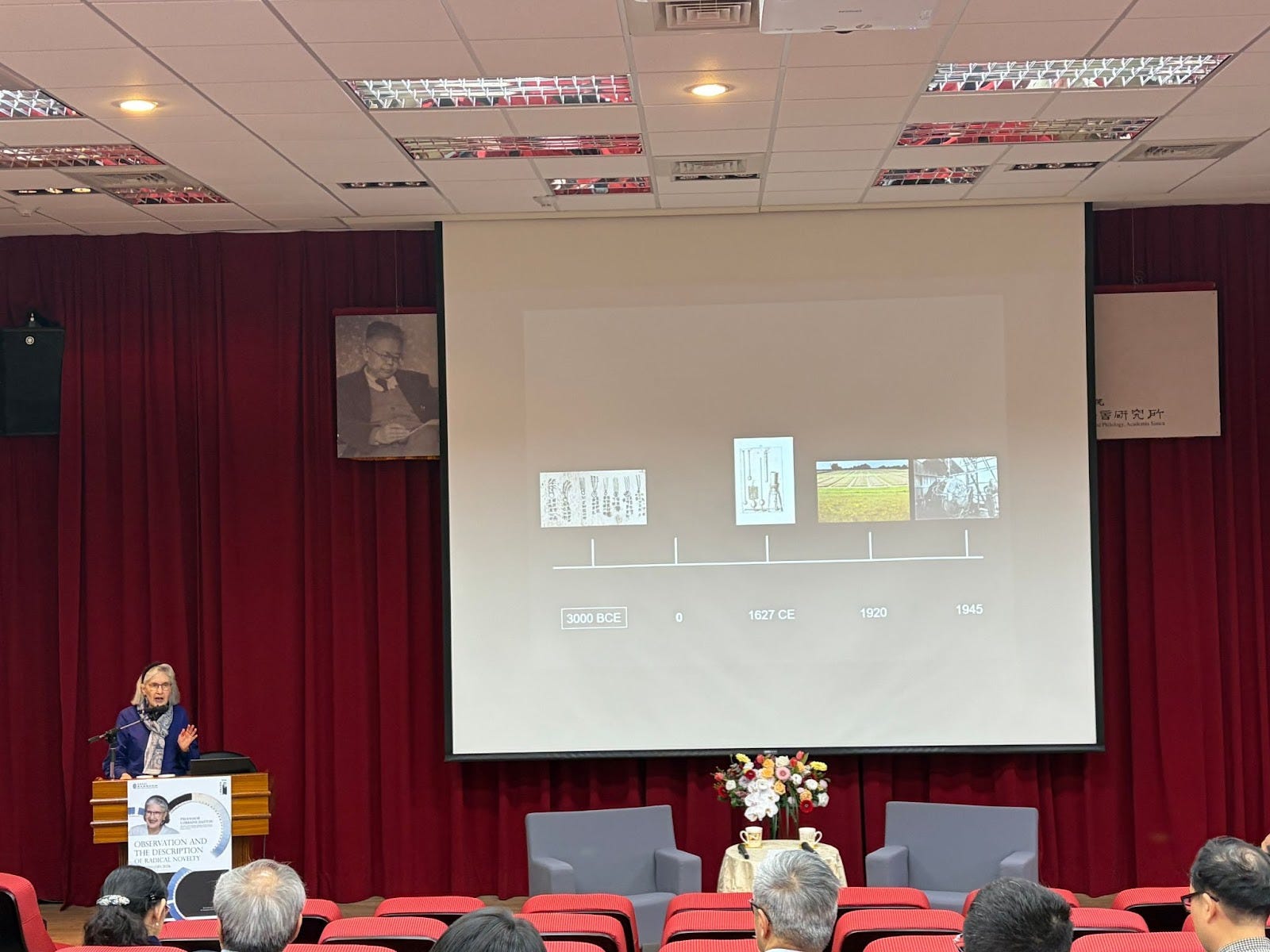
We’ve come to believe that the true masters of the craft reveal themselves in Q&A, and she was simply extraordinary. She was able to engage with every question in a sustained and generative way. Quoting chapter and verse from Descartes’s Discourse and Aristotle’s Ethics on the fly doesn’t hurt either. In an age when knowledge itself feels besieged — when expertise is dismissed, when the very idea of careful, patient inquiry can seem quaint — there is something genuinely hopeful and exciting about watching someone who has spent decades thinking deeply about how humans come to know things. Daston reminded us that the pursuit of knowledge has always been fragile, always contested, and always worth defending.
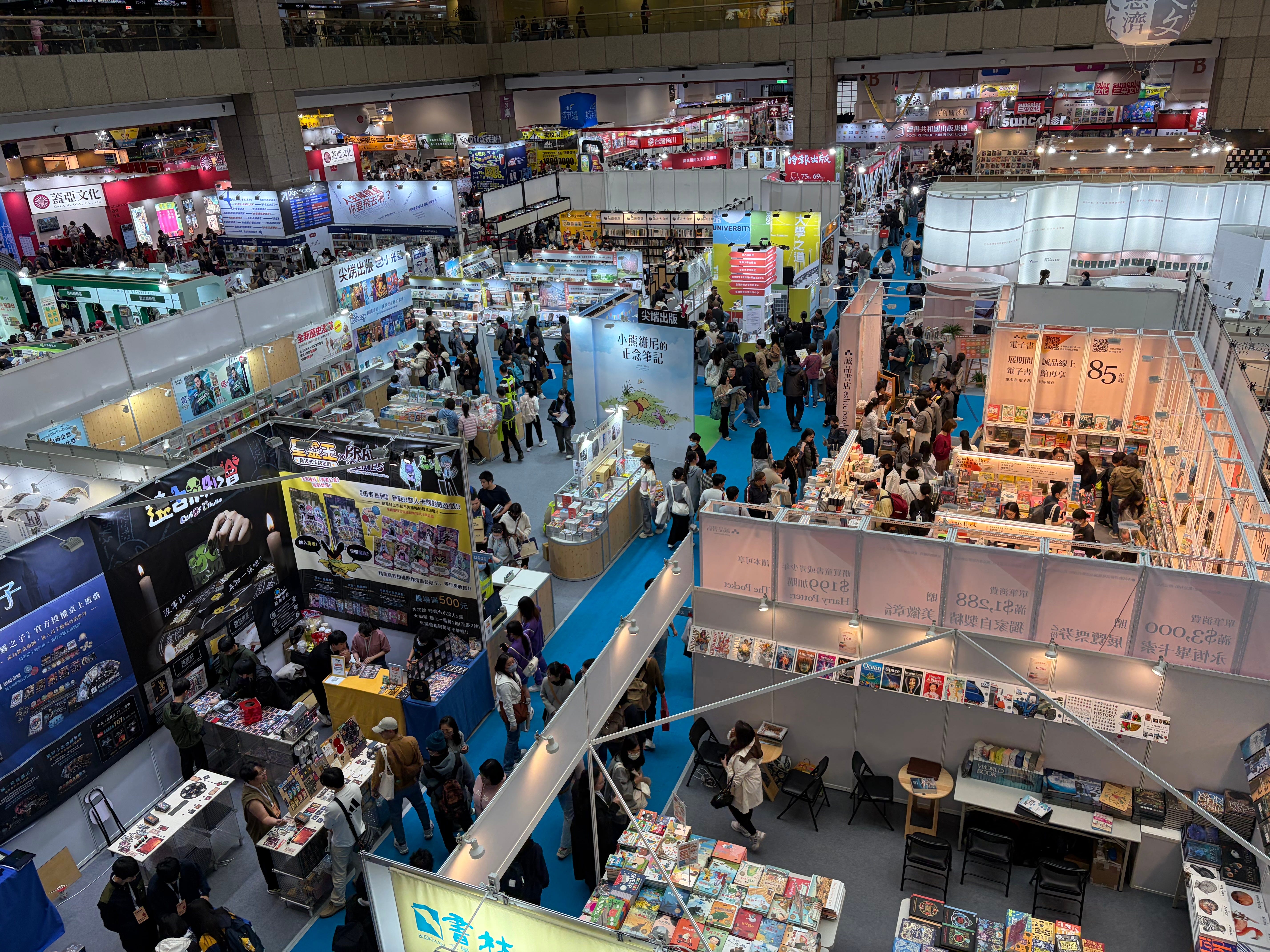
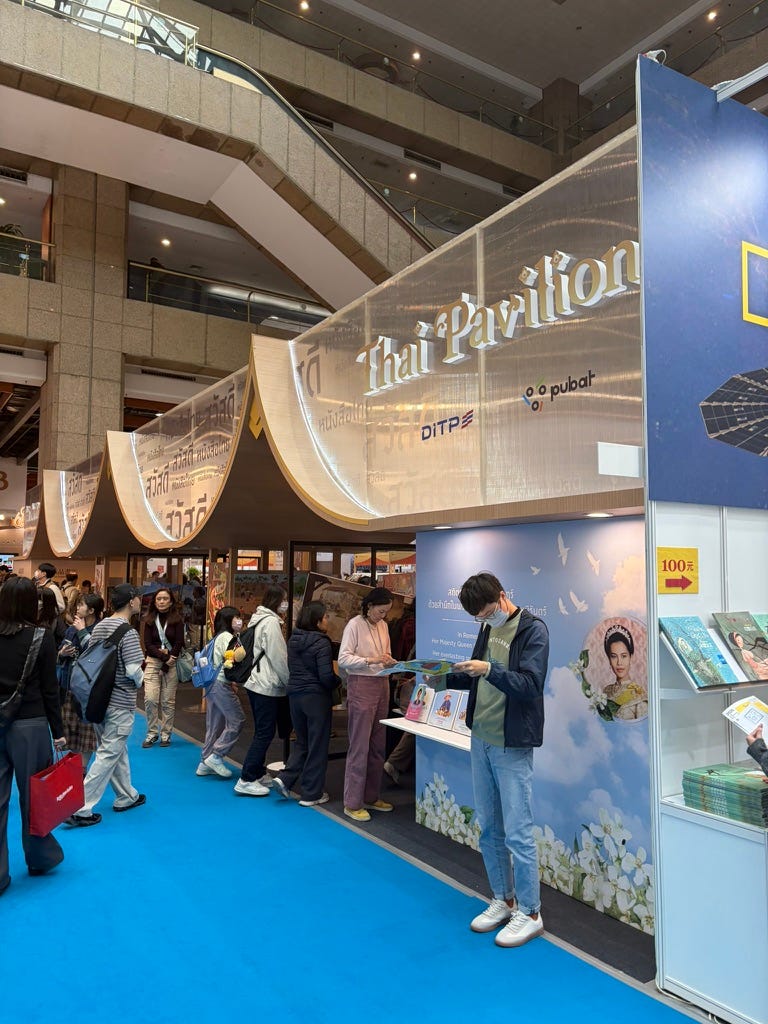
Early February is also one our favorite times of year in Taipei because of the Taipei International Book Exhibition. We’ve written about the fair in years past (Mandarin version at Up Media). The guest of honor this year was Thailand, and the pavilion highlighted established and independent publishers from the country.
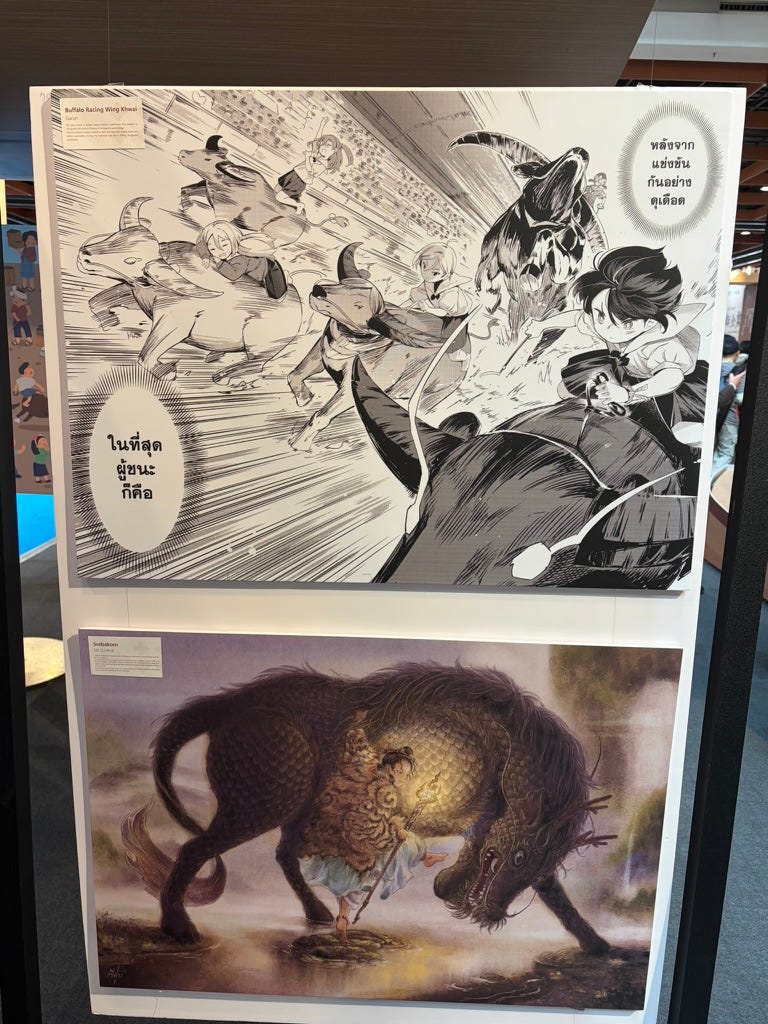
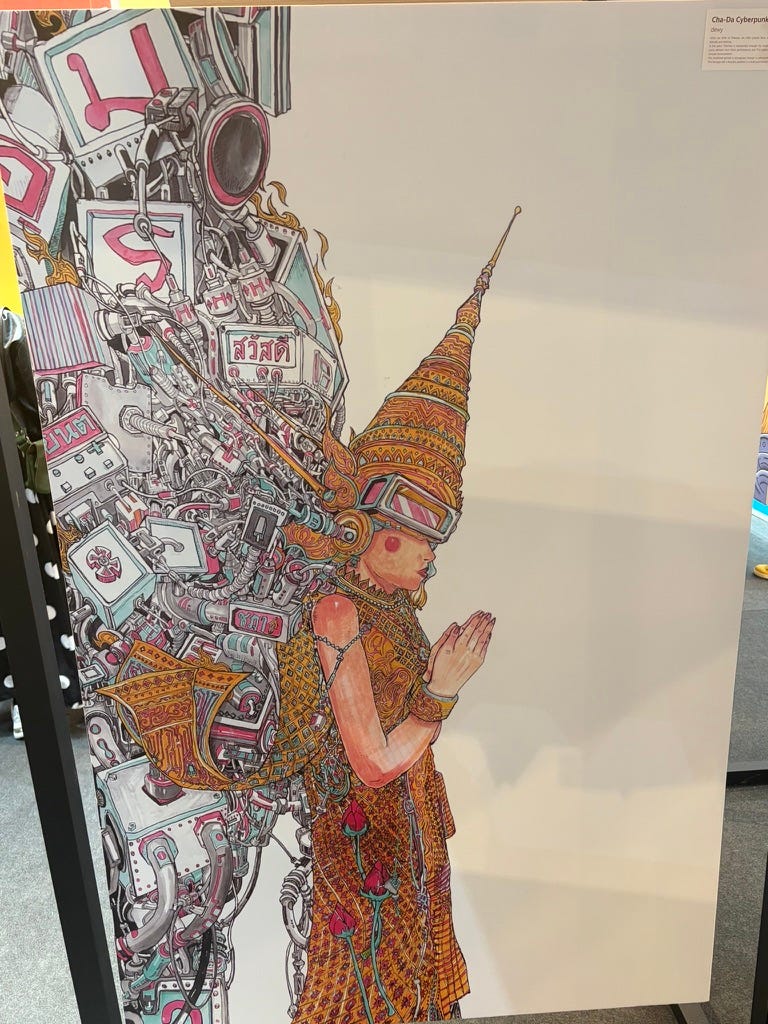
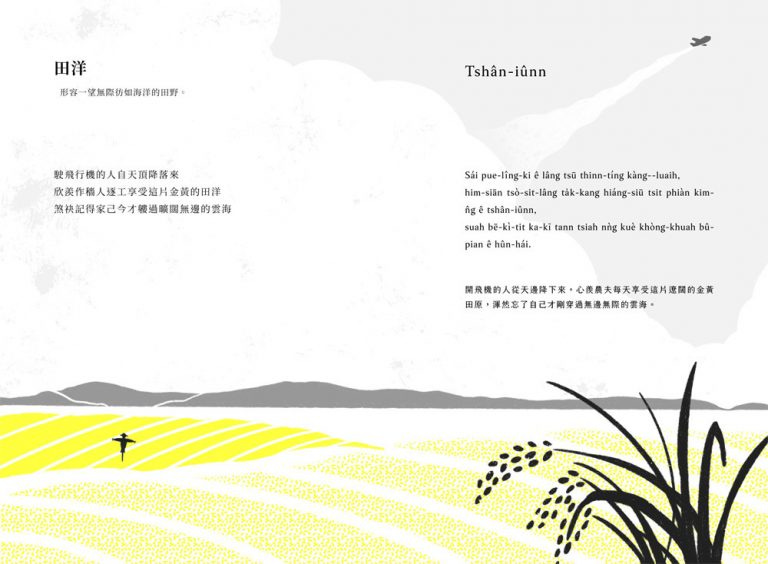
One of the books that everybody has been talking about is Un Jiòk-kiâu’s (温若喬) Jit-hue Siám-sih: Beautiful Taiwanese Words & 100 Poems 《日花閃爍: 台語的美麗詞彙&一百首詩》. (Shout-out to Michelle’s former editor Yahan for picking up a copy for us!) Un Jiòk-kiâu is behind 學台語 O̍h Tâi-gí, a popular online initiative promoting Taiwanese-language education. Her first poetry collection contains a hundred poems built around beautiful, half-forgotten Taiwanese words she dug out of historical dictionaries. Among them is the 1931 Tai-Nichi Daijiten, a comprehensive Taiwanese-Japanese dictionary compiled during the colonial period. The title word, jit-hue, means the dappled light that falls through gaps in leaves or clouds. Un wants to recover the poetic beauty of Taiwanese — a language dismissed during martial law as fit only for cursing and market haggling.
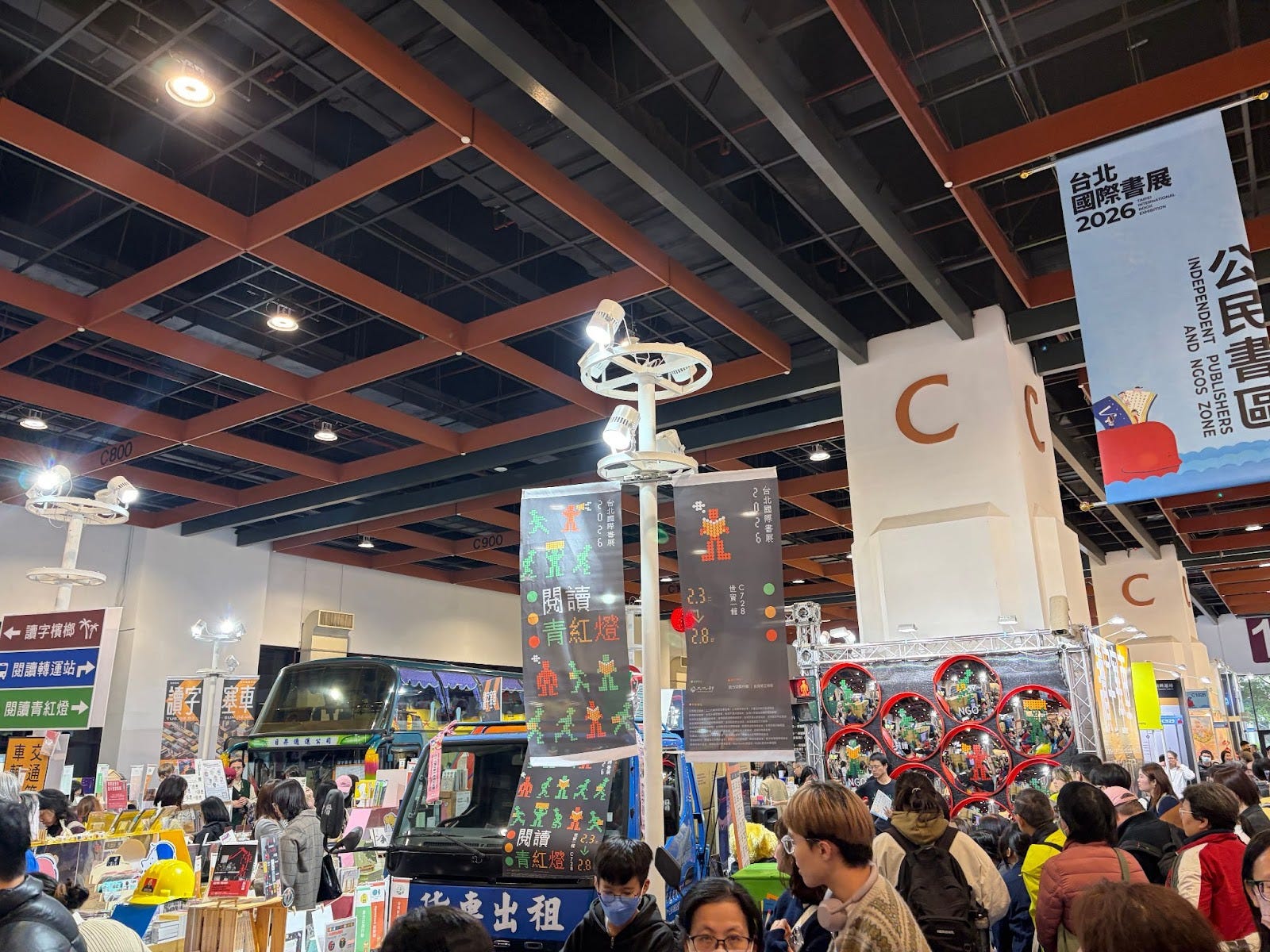
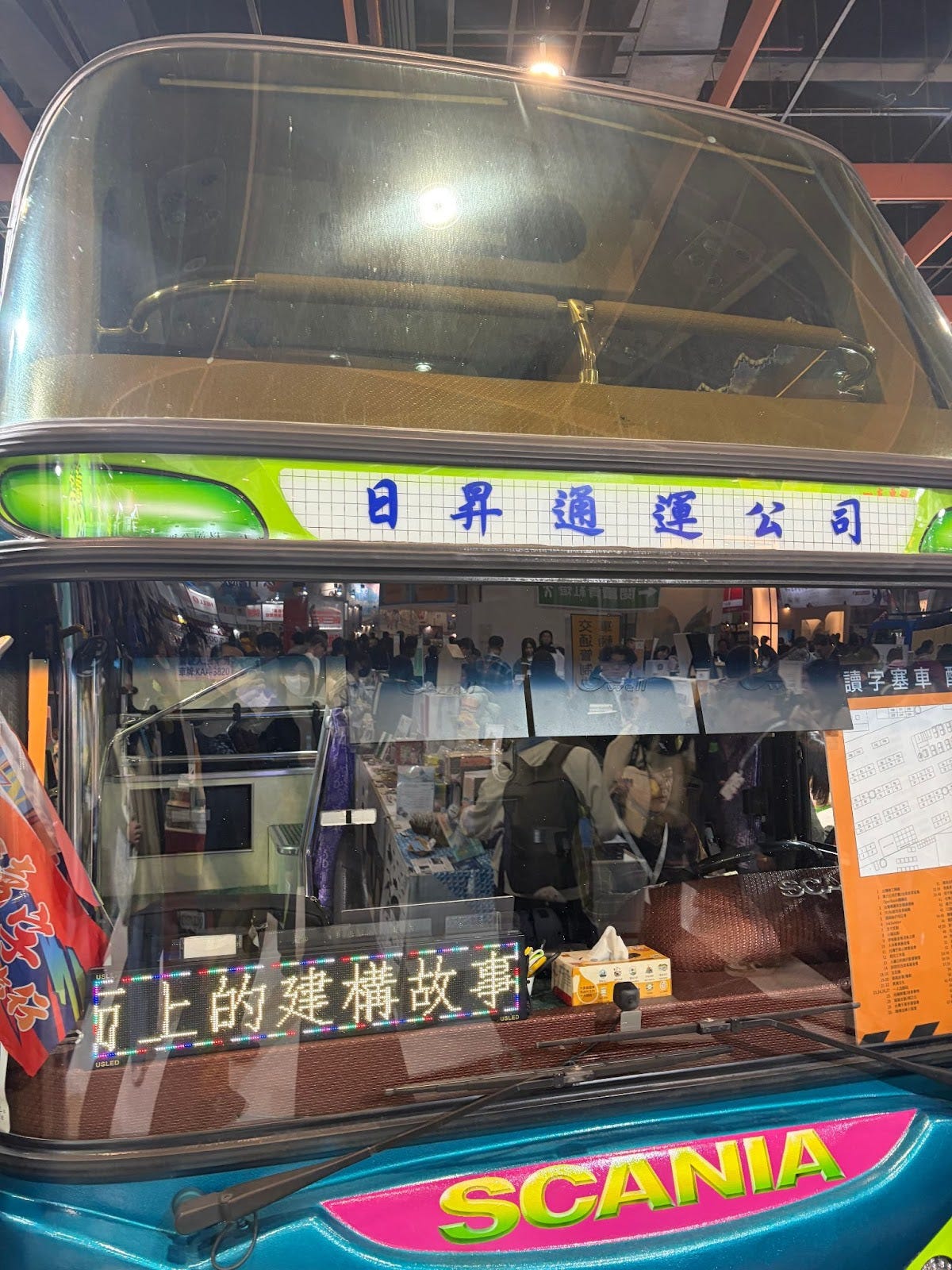
In the past few years, the coalition of NGO groups unfailingly organizes the most creative exhibits. They outdid themselves this year, parking a literal tour bus inside the convention center to serve as a venue for talks. Even the checkout counter was fashioned into a very local-looking betel nut stand, capturing the theme of a “road trip through literature.” (If you’ve seen the new and wonderful Taiwanese film Left Handed Girl, a betel nut shop plays a central role in the film.)

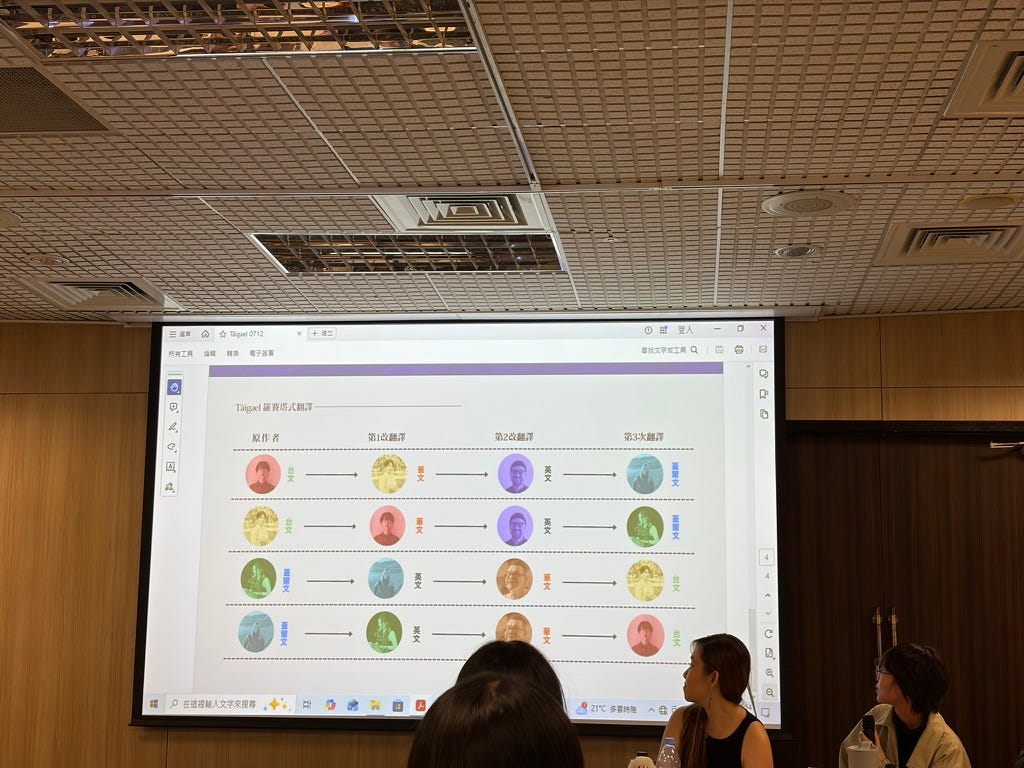
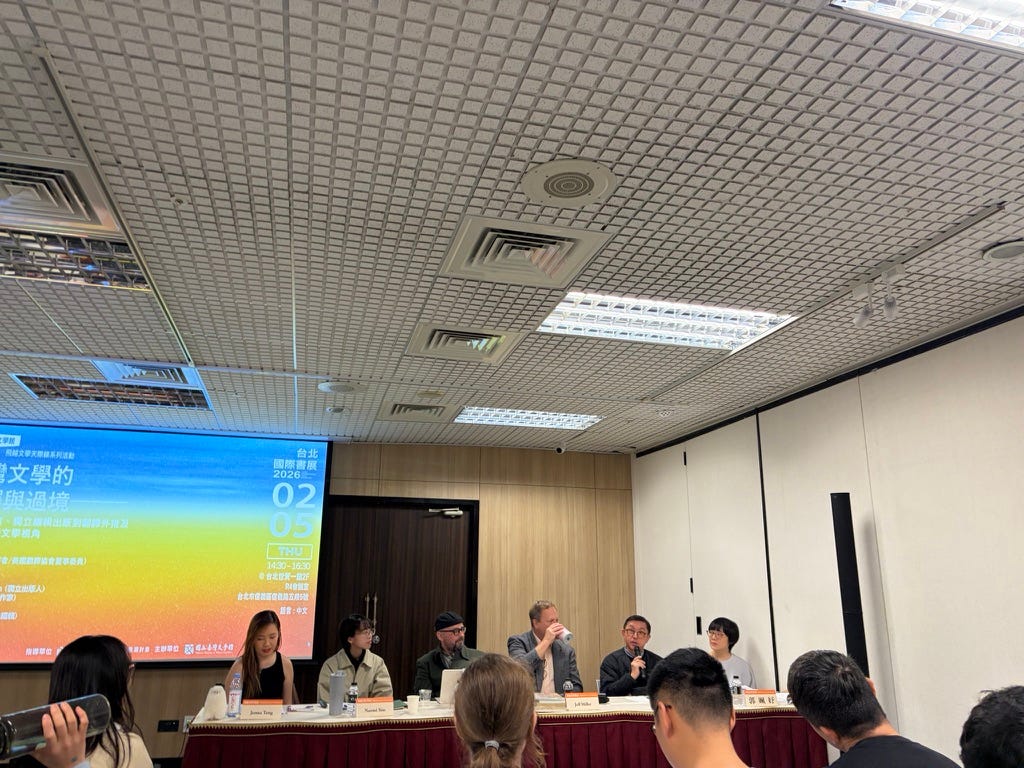
We attended a deeply moving panel of translators, hosted by the National Museum of Taiwanese Literature and moderated by translator Jenna Tang. Will Buckingham of the terrific indie publisher Wind and Bones — founded by Will and his wife, Hannah Stevens — and translator Naomi Sim described the quiet, painstaking work of translating Tâigel between Taiwanese, English, Gaelic, and Mandarin. (See Naomi’s very complex and insane diagram below.) Meanwhile, one of the leading Korean translators of Chinese-language literature described his journey from imprisonment under an authoritarian regime to introducing Taiwanese writers to Korean readers. This trajectory reveals what literature can mean to those once denied the freedom to choose what they can read.
Michelle spent the week working at the fair, sharing Taiwanese comics, graphic novels, and children’s books with editors from around the worlds. She was excited to meet up with hometown publisher Eerdmans, based in Grand Rapids, Michigan, just a stone’s thrown from her native Kalamazoo. Eerdmans has a longstanding commitment to translating beautiful children’s books across the world to English. (Courtney Zonnefeld, the radiant editor whom Michelle met, came to Taiwan through a fellowship sponsored by TAICCA, an arm of the Taiwanese government; if you’re in the book industry, come!) The two took a selfie where they said, “Midwest is best!”
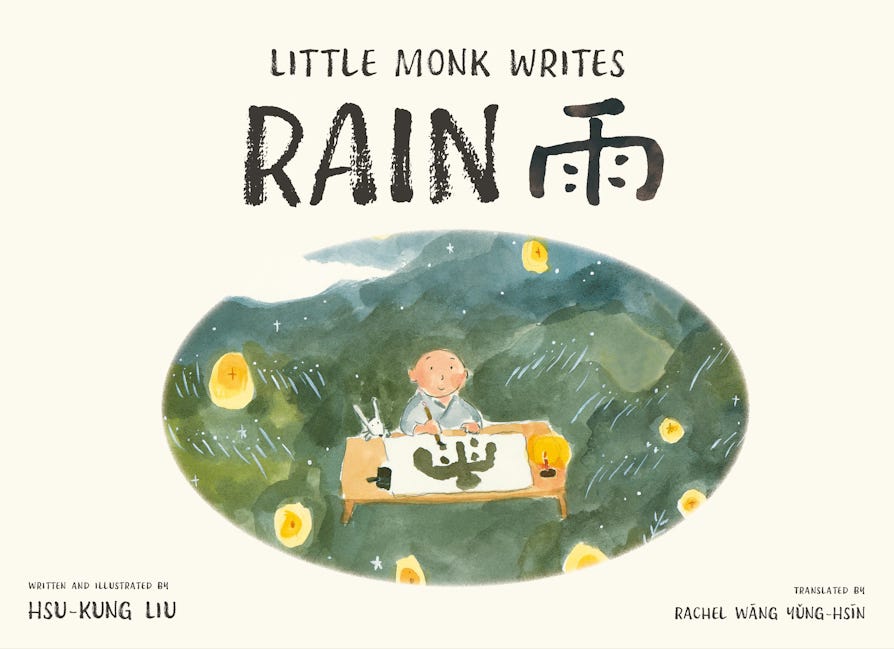
Happily, Eerdmans is publishing Taiwanese artist Liu Hsu-kung’s Little Monk Writes Rain (tr. Rachel Wang Yung-hsin), a profound and gorgeous picture book about an orphan and illiterate monk.
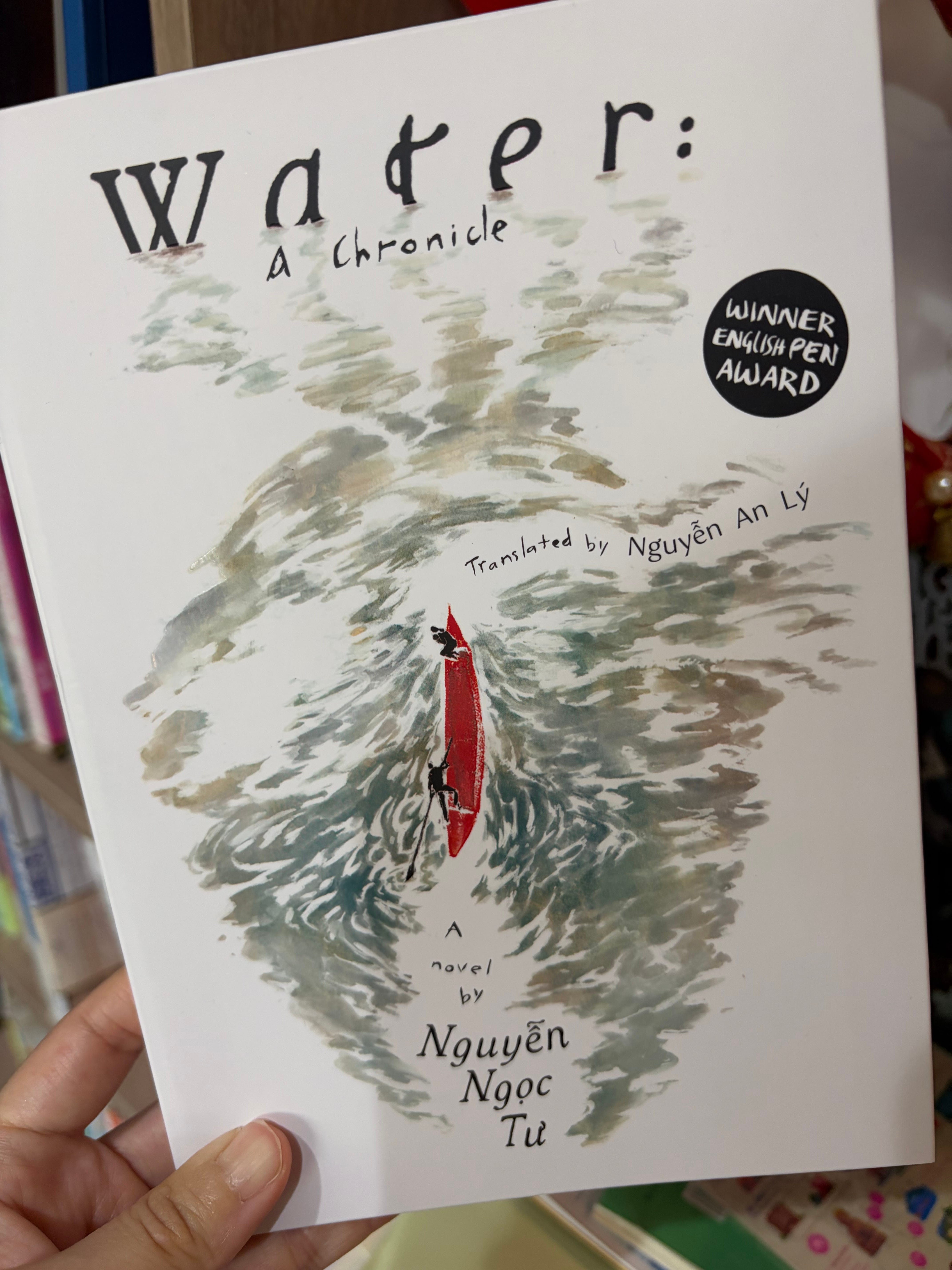
Kim Tran, a pioneering Vietnamese editor and founder of the indie publisher Major Books, also inspired many Taiwanese folks here. While Western authors are widely exported to Vietnam, it’s rare for Western publishers to acquire and translate books originally published in Vietnamese. Kim’s dream of introducing Vietnamese writers to the Anglo-speaking world is an uphill battle, requiring focus and grit; somehow it’s fitting that her other job is being a top rated Muay Thai fighter. (Yes, you read that correctly.) We started reading Water: A Chronicle by Nguyễn Ngoc Tư (Major Books), translated by Nguyễn An Lý, set in the Mekong Delta.
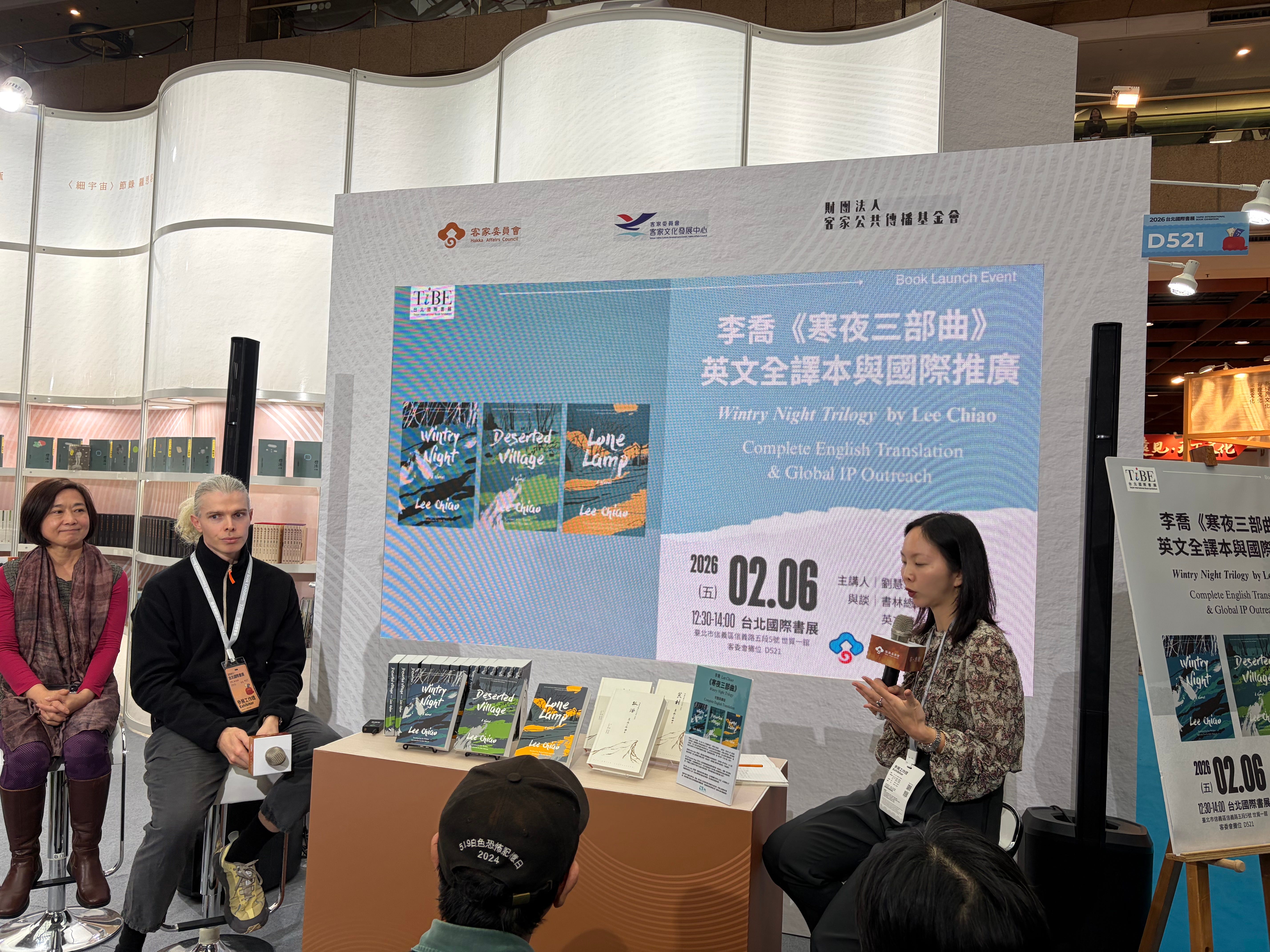
Shin Su and Ian Maxwell at Bookman have achieved something monumental in releasing an English translation of Lee Chiao’s canonical Wintry Night trilogy. Over at the lovely Hakka Affairs Council (HAC) stand, they co-led an event discussing the process of translating and editing these books. A newer edition will be released from a Canadian publisher; look out for our updates on this!
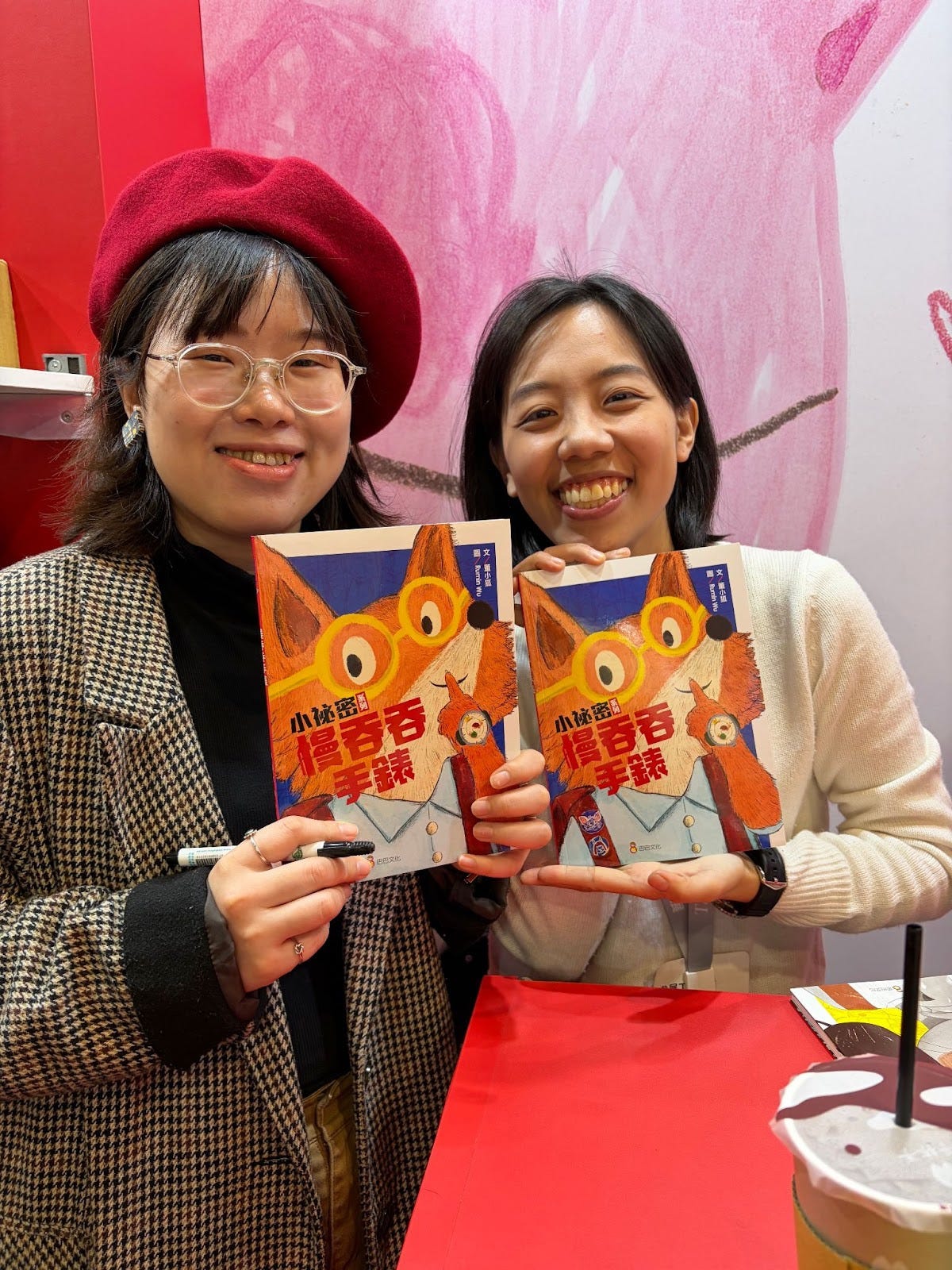
No-longer-a-baby P. has also reached the age where she can actually sit through a full event at the book fair. She attended an electrifying story time at Papa Publishers (巴巴文化), where a rapt audience of children heard two stories — one about a slowpoke fox, the other a forgetful monkey. During the Q&A, illustrator Rumin Wu said she’s very spacey and constantly forgets her keys. P. shouted out in Mandarin, “Mommy always forgets her keys, too!”
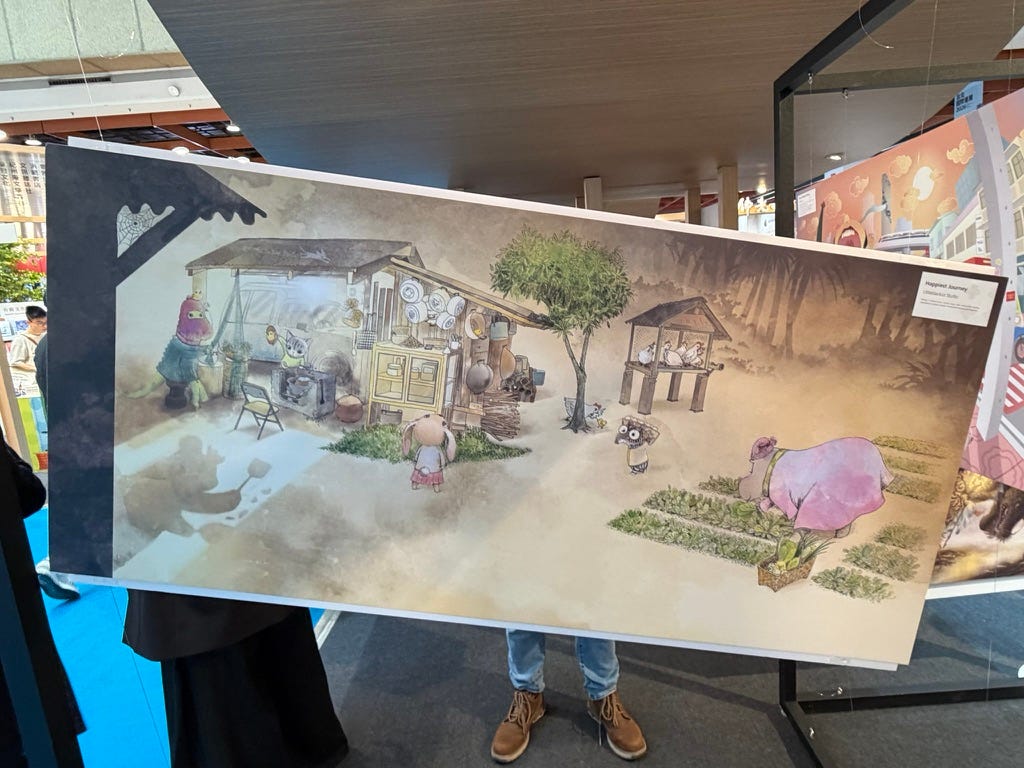
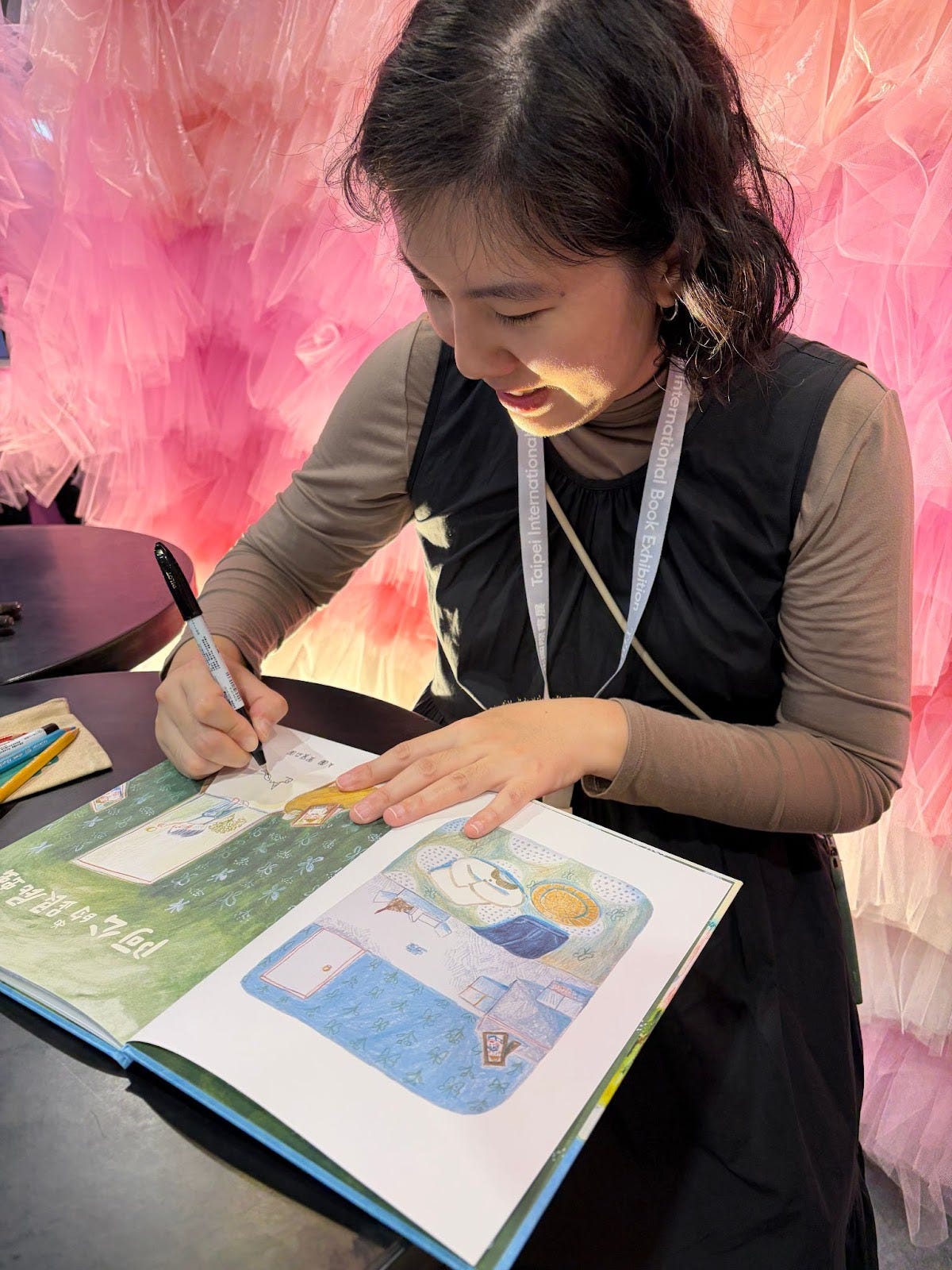
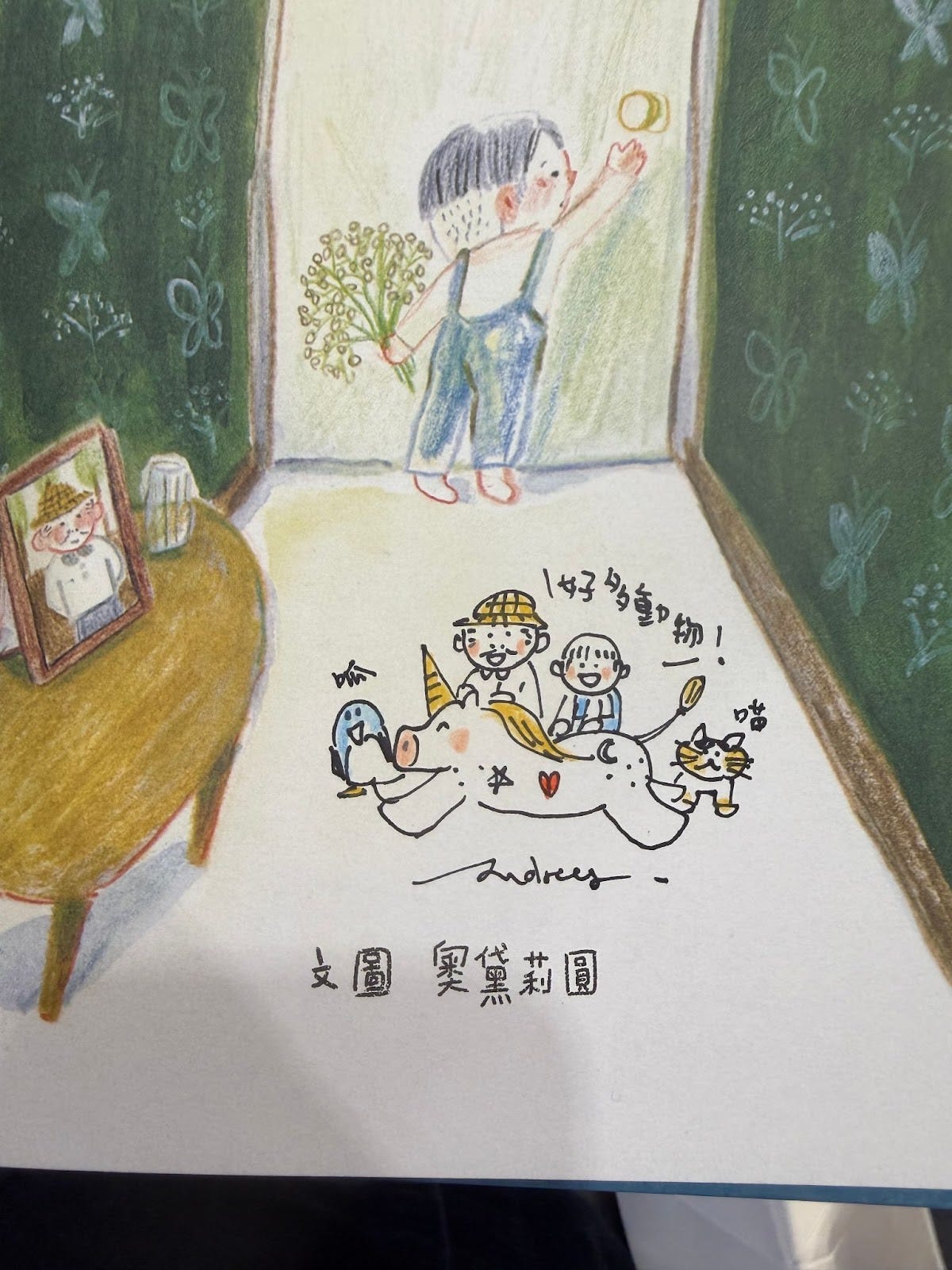
We also witnessed great artists at work: children’s book illustrator Audrey Yuang fulfilled no-longer-a-baby-P’s completely unreasonable demand to sign her book with a cat, unicorn, and penguin. Audrey’s book, Grandpa’s Little Follower, inspired by her own grief over her grandfather’s passing, tells the story of a boy who loses his grandpa and remembers the things they shared, from walking mountain paths to eating egg cakes on his birthday.
At the same time, the great French illustrator Magali Le Huche did live drawings to the soundtrack of the Beatles.
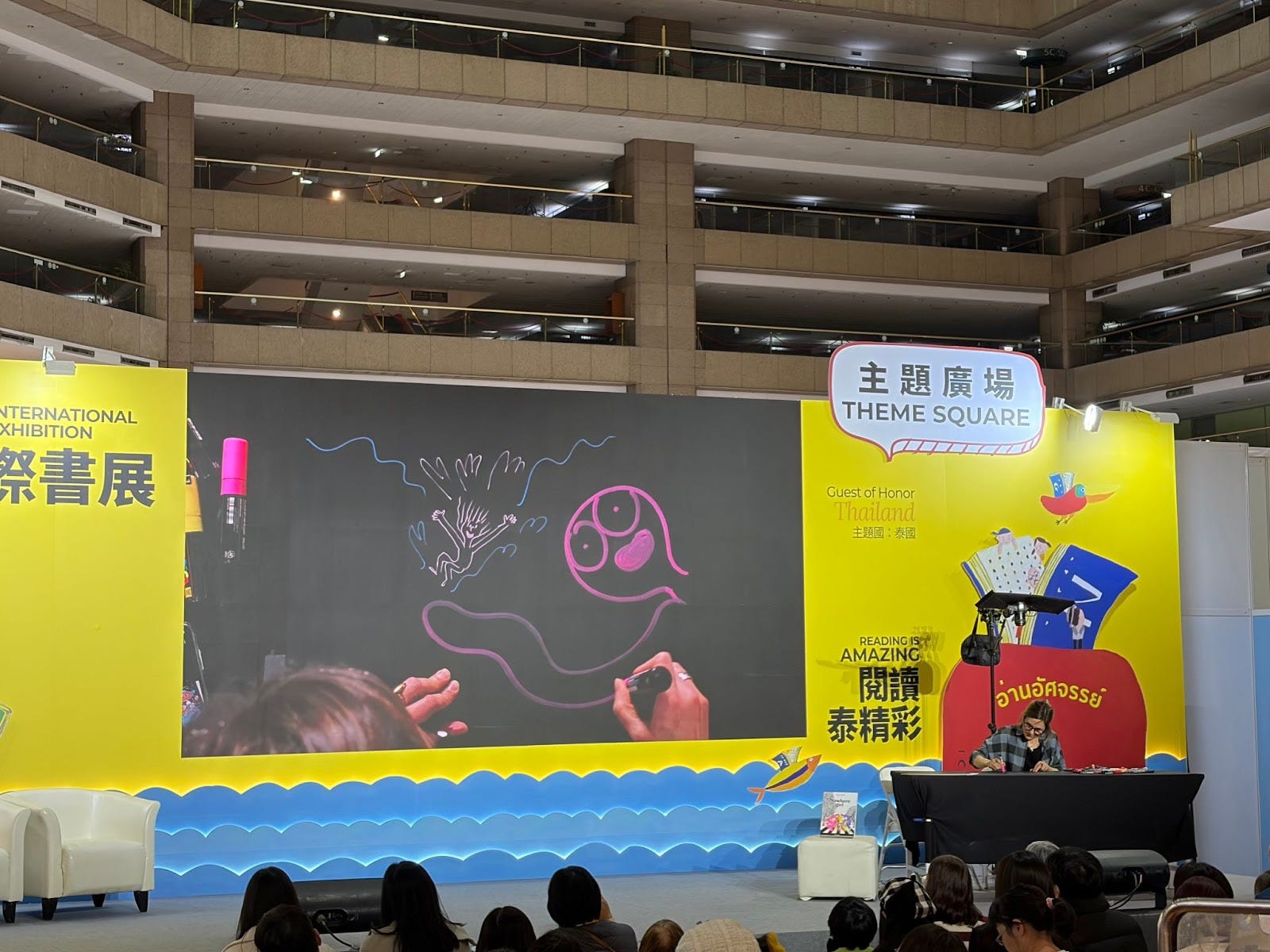
It’s deeply restorative to watch creative people do what they do in a concentrated space. Even though at times we feel a bit of despair at the state of books and reading, we came away from the book fair with an overwhelming sense: book people are still the best people.
And finally, we’re in the final day of the long Lunar New Year break. To prepare for the new year, we made our annual pilgrimage to Dihua Street, jam-packed with shoppers and New Years goods.
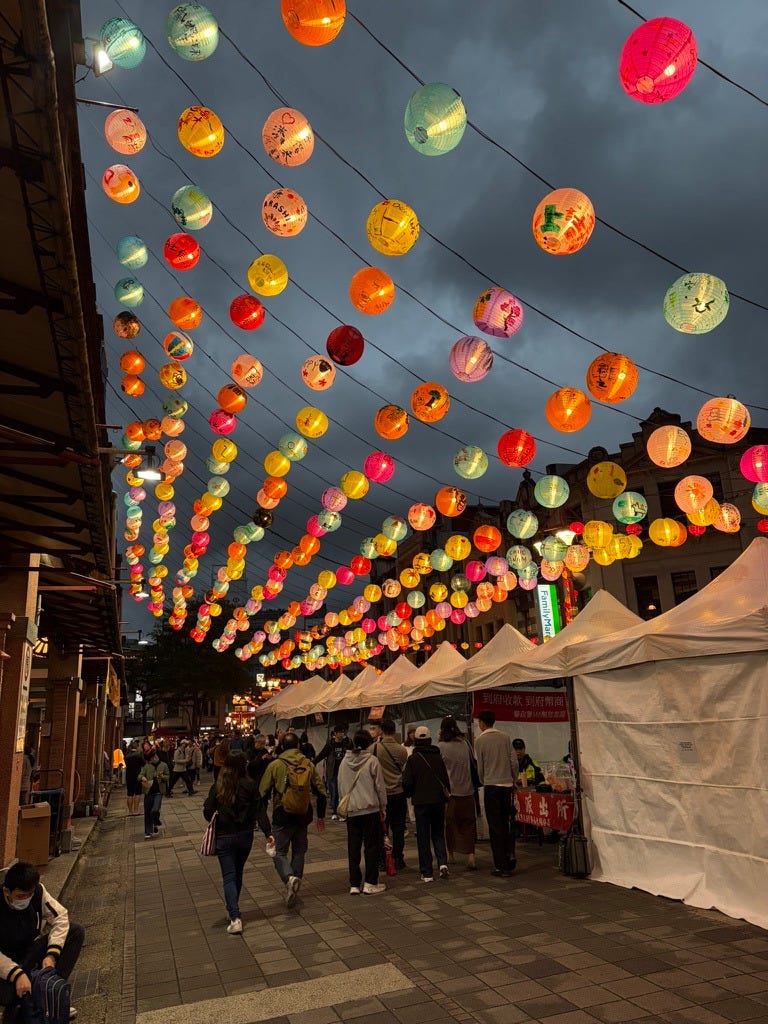
We had the good luck to roam the streets with our friend Maiya, a teacher in Penghu, and her awesome mathematician dad Chris. Together we came across this amazing lantern of a cat riding a horse:
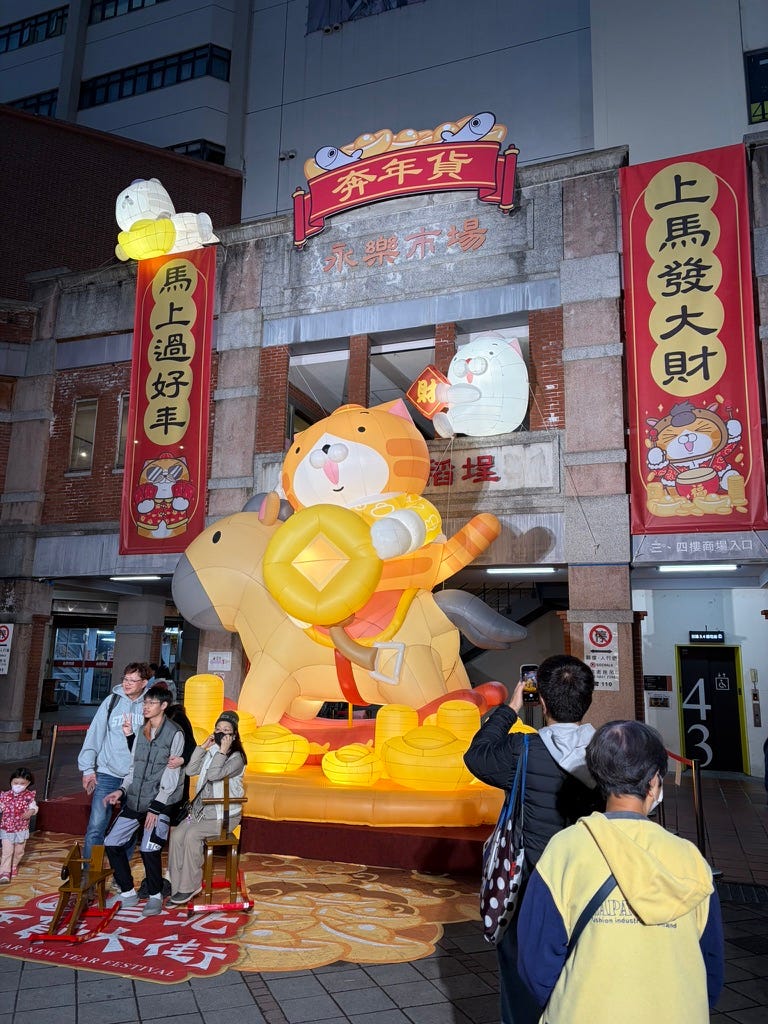
And in the square out front, a local association taught people how to spin traditional Taiwanese tops. (Spinning tops, btw, is a major plot point in the popular Taiwanese manga Rites of Returning!) Michelle got to try spinning a huge top—at first Michelle thought it was a drum—that required a full sprint to keep it going.
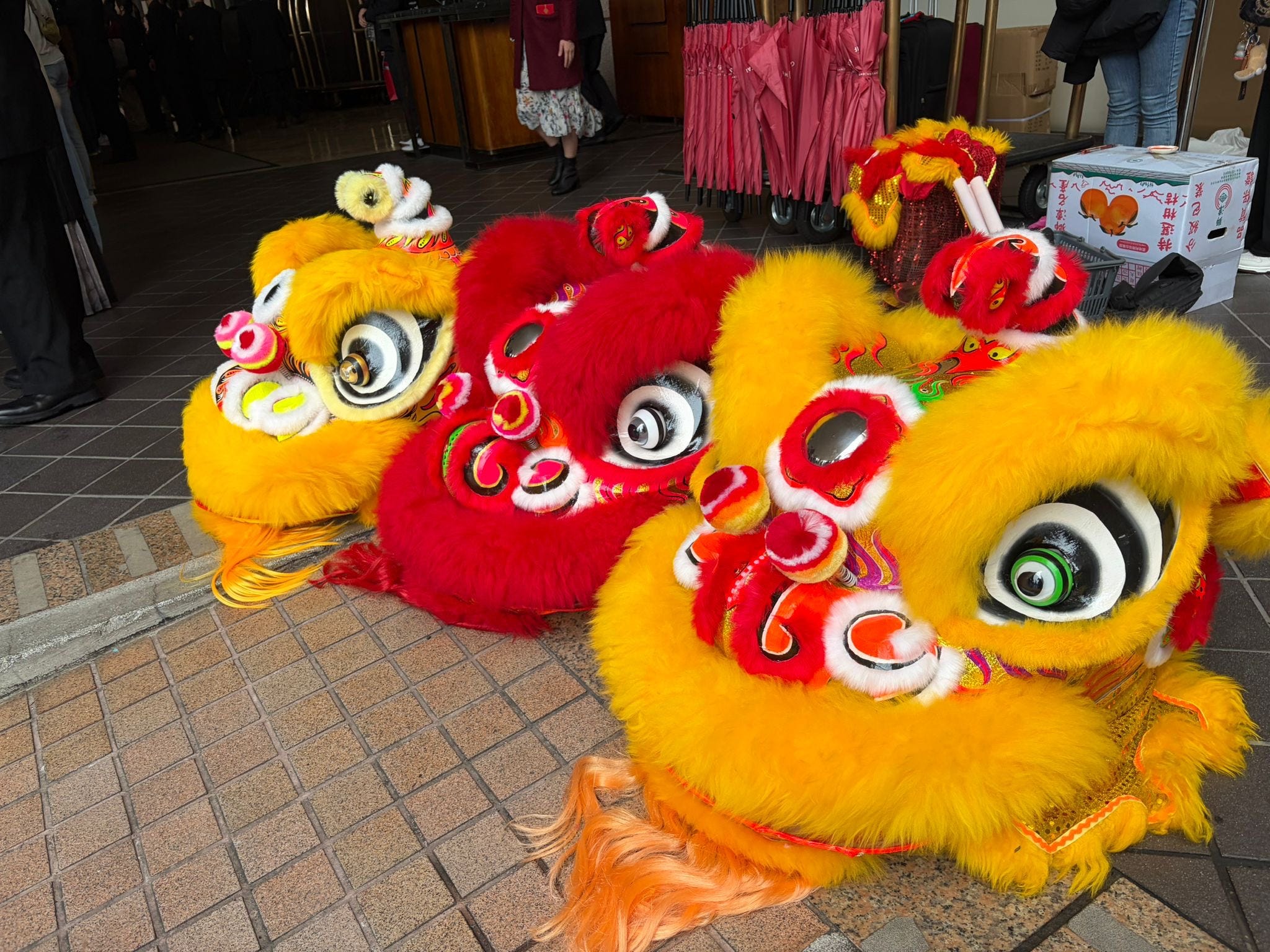
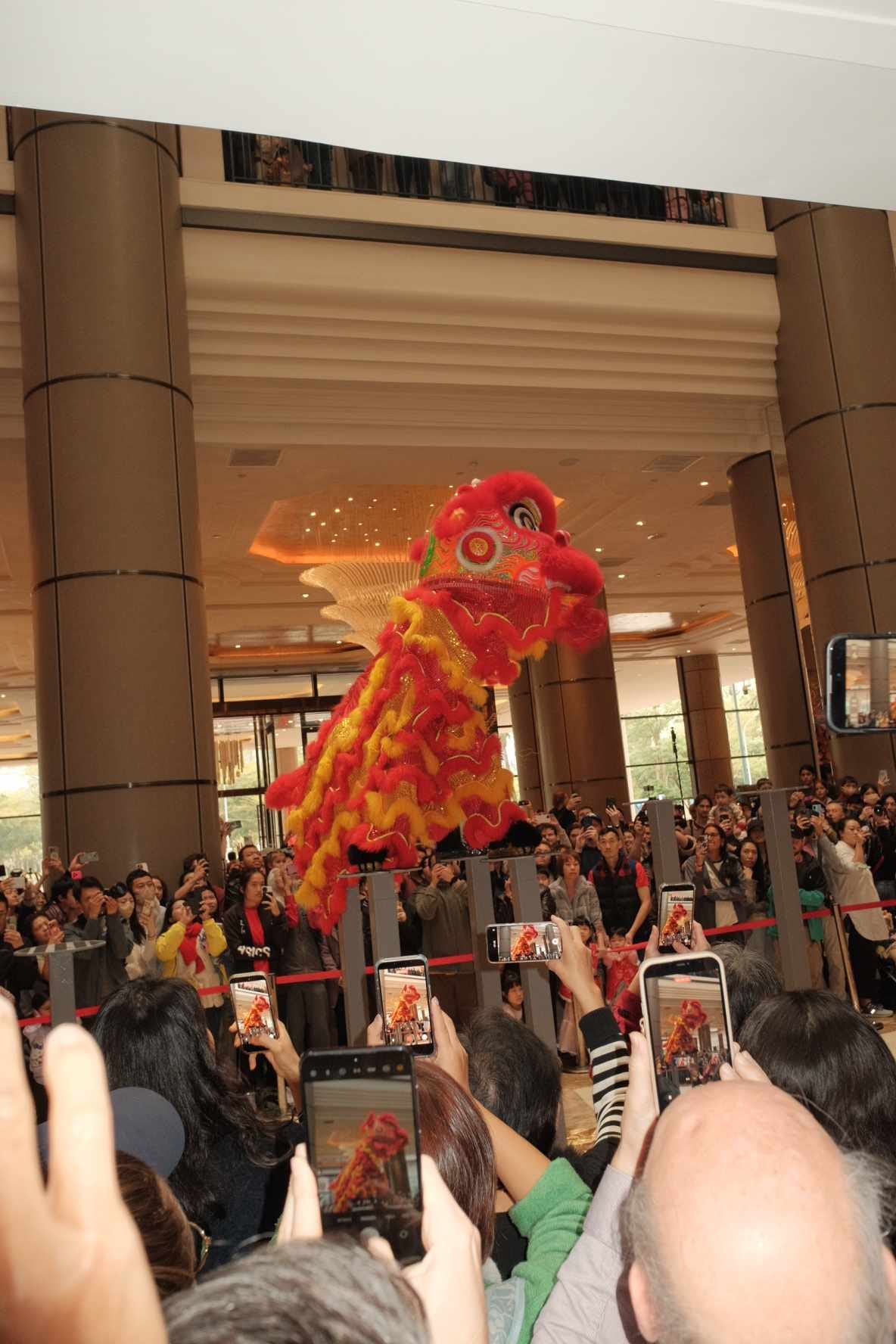
We stayed in Taipei for the new year—we were planning on going to Hualien, but came down with colds and bad allergies. On New Year’s Day, our friends Anne and Eric invited us to see epic lion dances who had very acrobatic tricks:
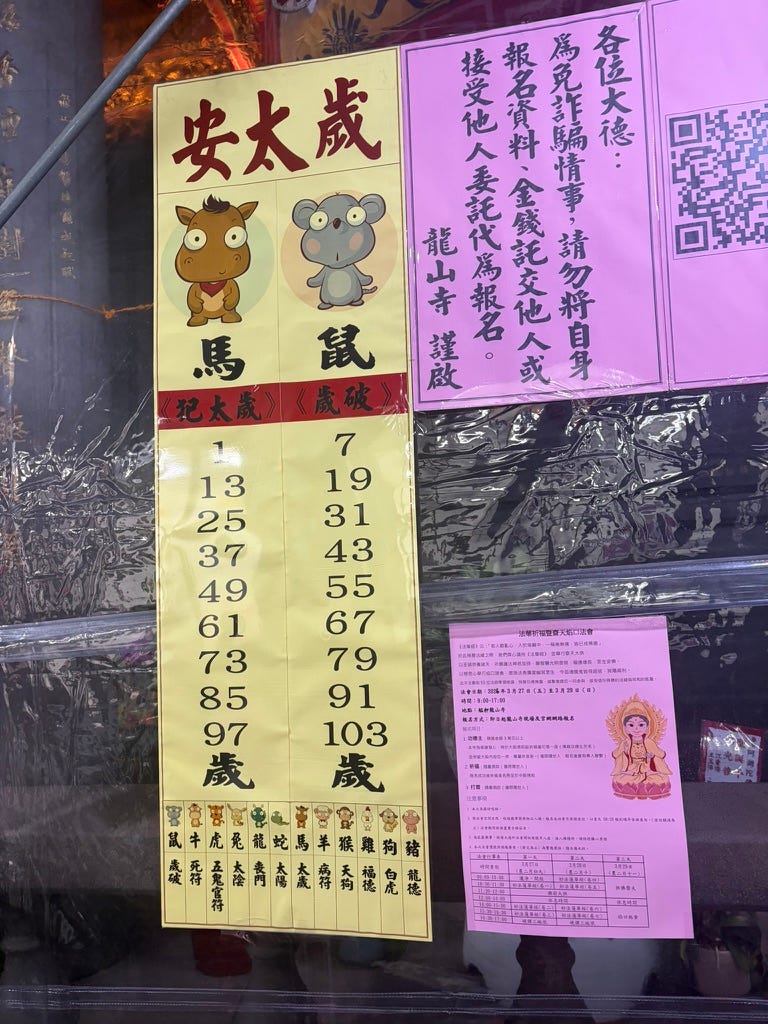
On the second day of the new year, we made our way to Lungshan Temple, our favorite temple in Taipei, to ask for blessings for the new year. Apparently this is a bad year for people born under the horse, rat, ox, and rabbit—if you’re born in the year of the rat, be extra careful! Since we have multiple family members in those signs, we went to ask for some protection.
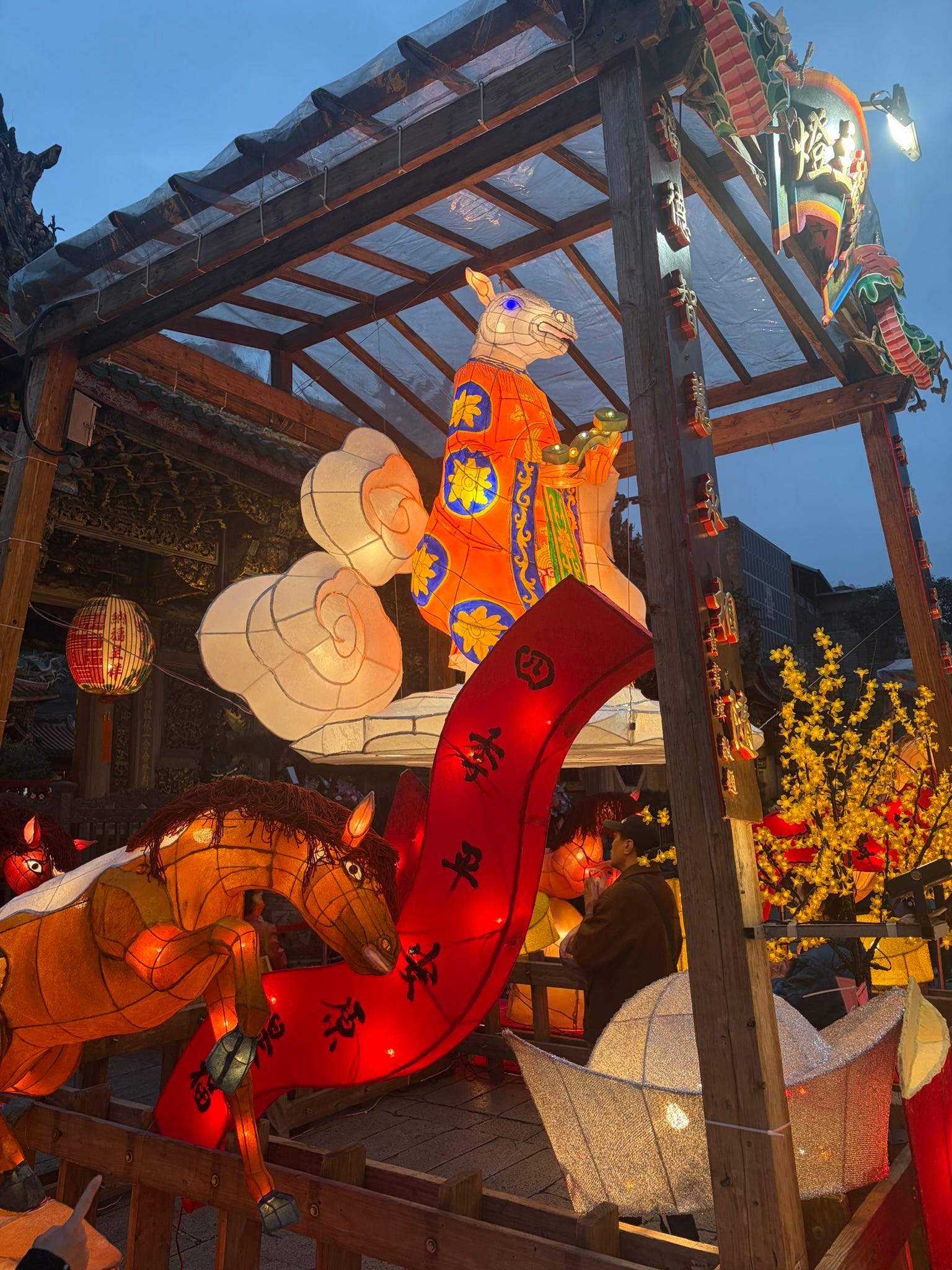
The temple already has some awesome lanterns up, including this one of the horse Tai Sui:
We met up with one of our heroes Lisa Cheng Smith, who co-founded Yunhai alongside Lillian Lin, and together wolfed down some traditional Taiwanese breakfast food together while our kids ran around the playground:
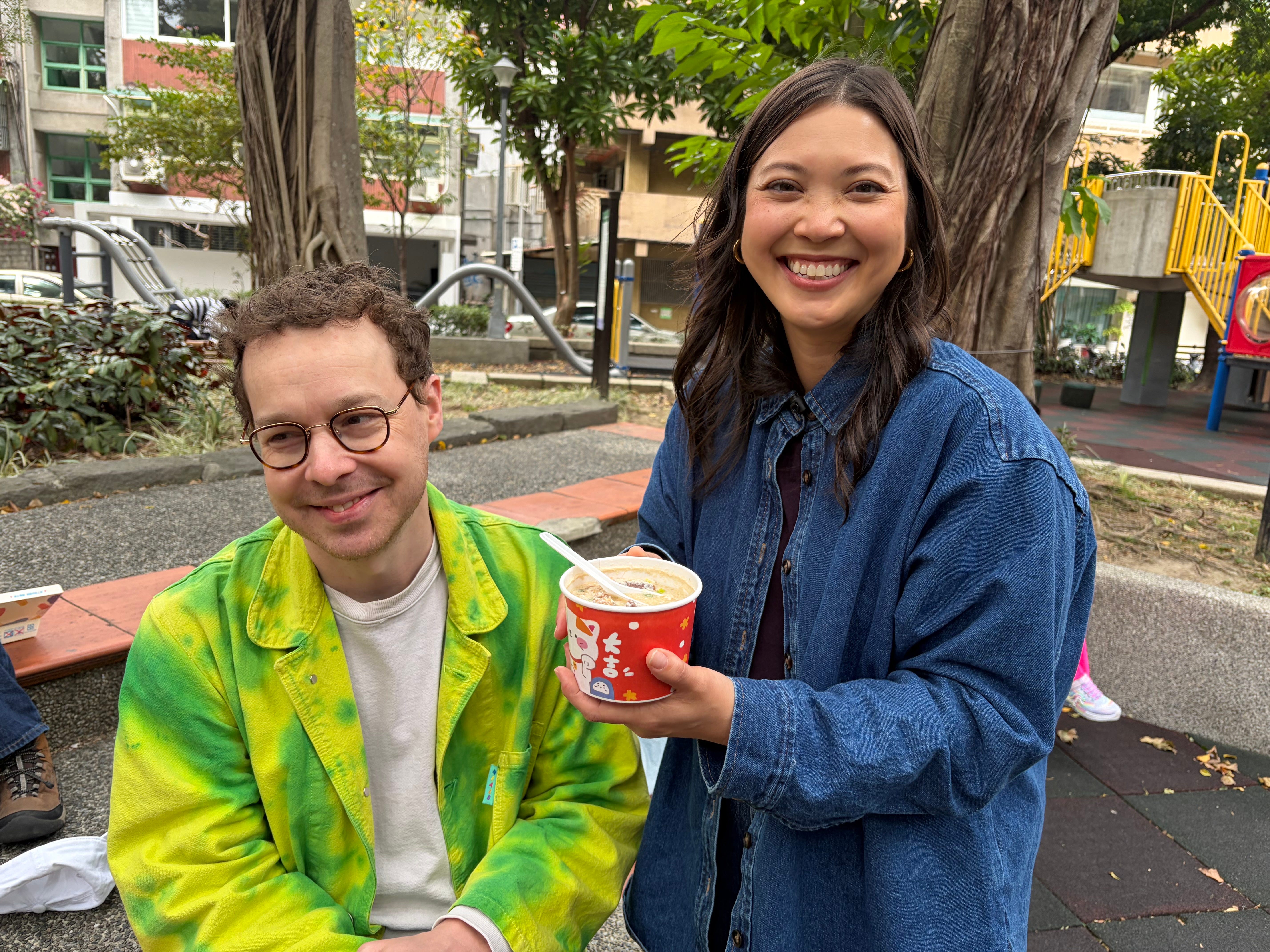
We happened to see the new year offerings at a breakfast shop on Ruian Street. It arranged grains before a small shrine: rice, millet, beans. Each bowl is a wish for abundance in the year ahead:
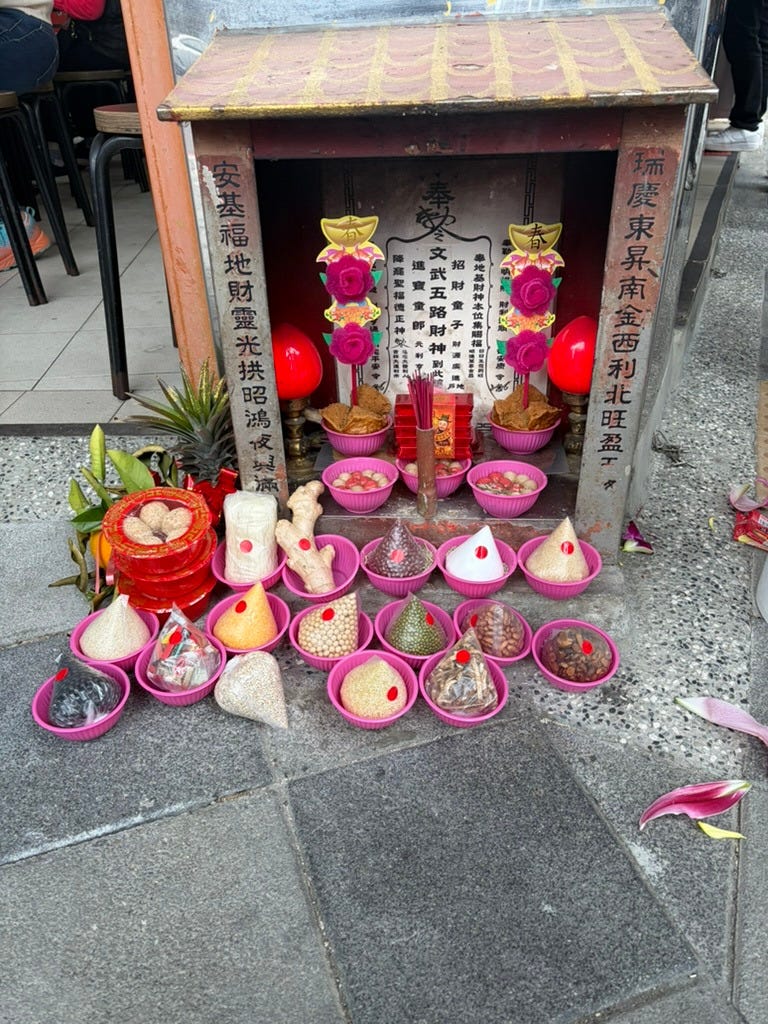
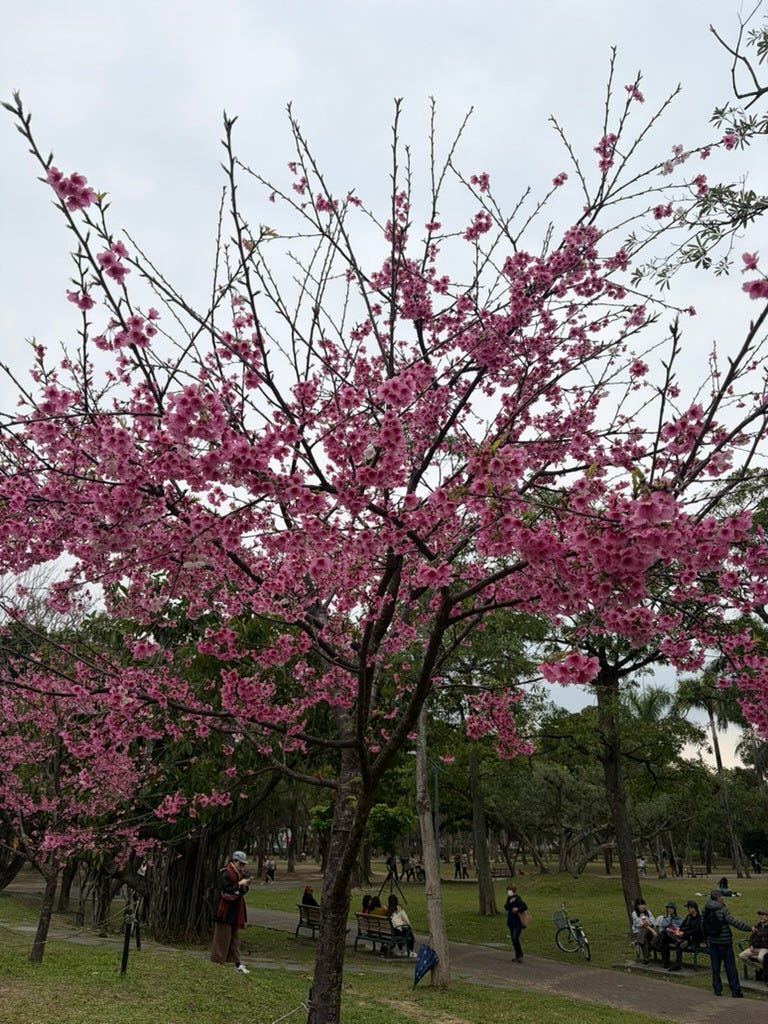
On the fourth day of the new year, we got to spend sometime in Da’an Park, where the cherry blossoms are in bloom:
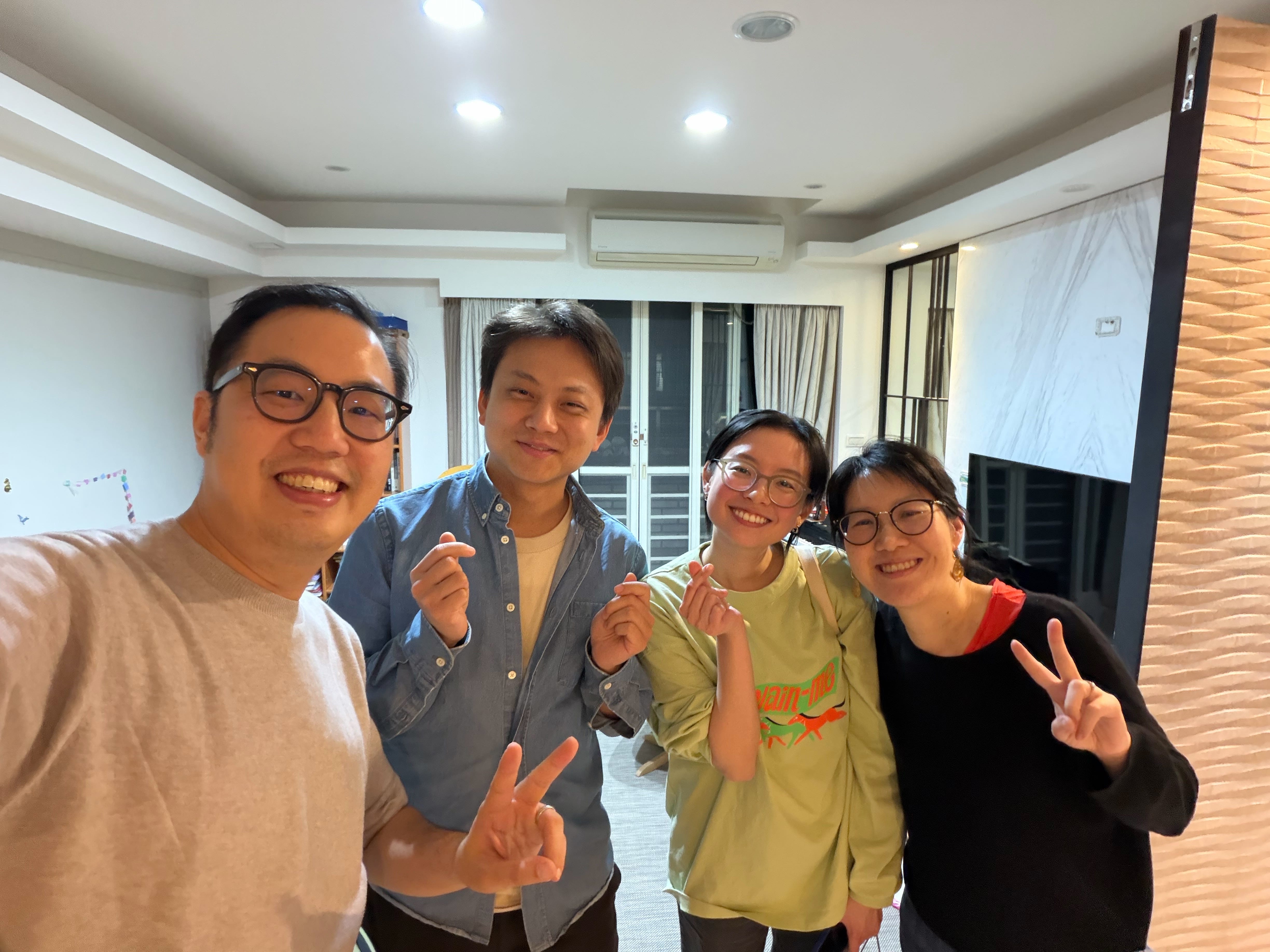
We kicked off the new year with these two wonderful translators of Taiwanese literature, Lin King and Kevin Wang, who were exceedingly kind to our aggressively friendly cat. (Look out for interview in the coming weeks with Kevin about his translation of Taiwanese author Terao Tetsuya’s Spent Bullets!)
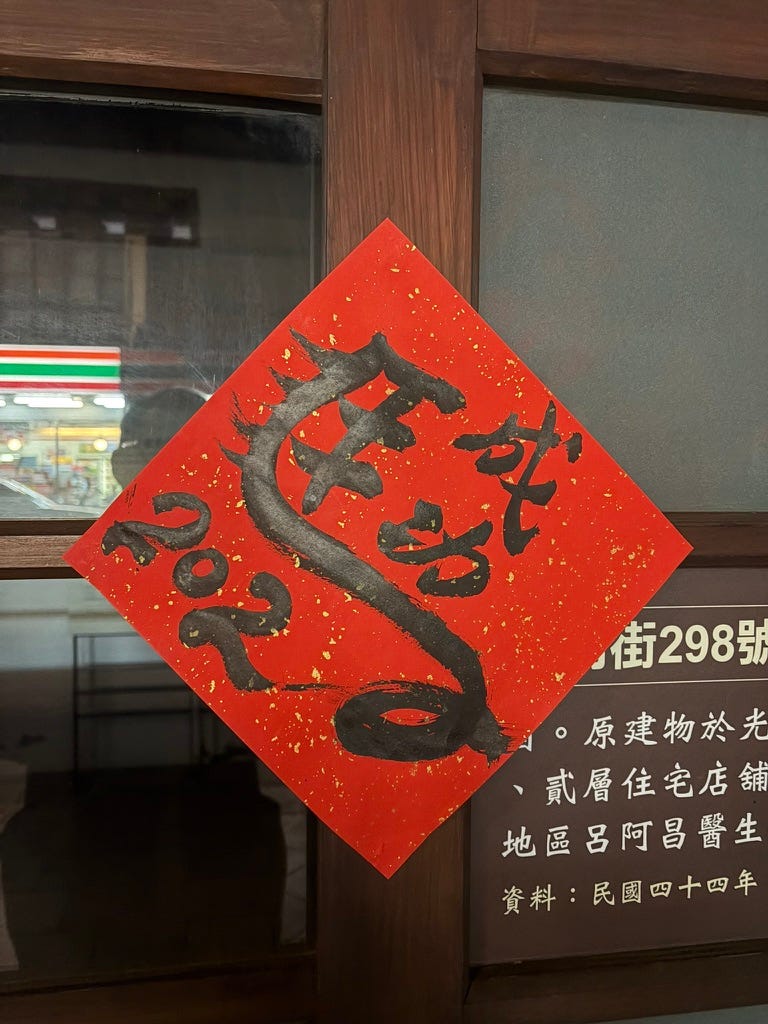
Here’s a blessing ( (馬上成功 or “Wishing you immediate success” ) wherein the character for “horse” loops into a six:
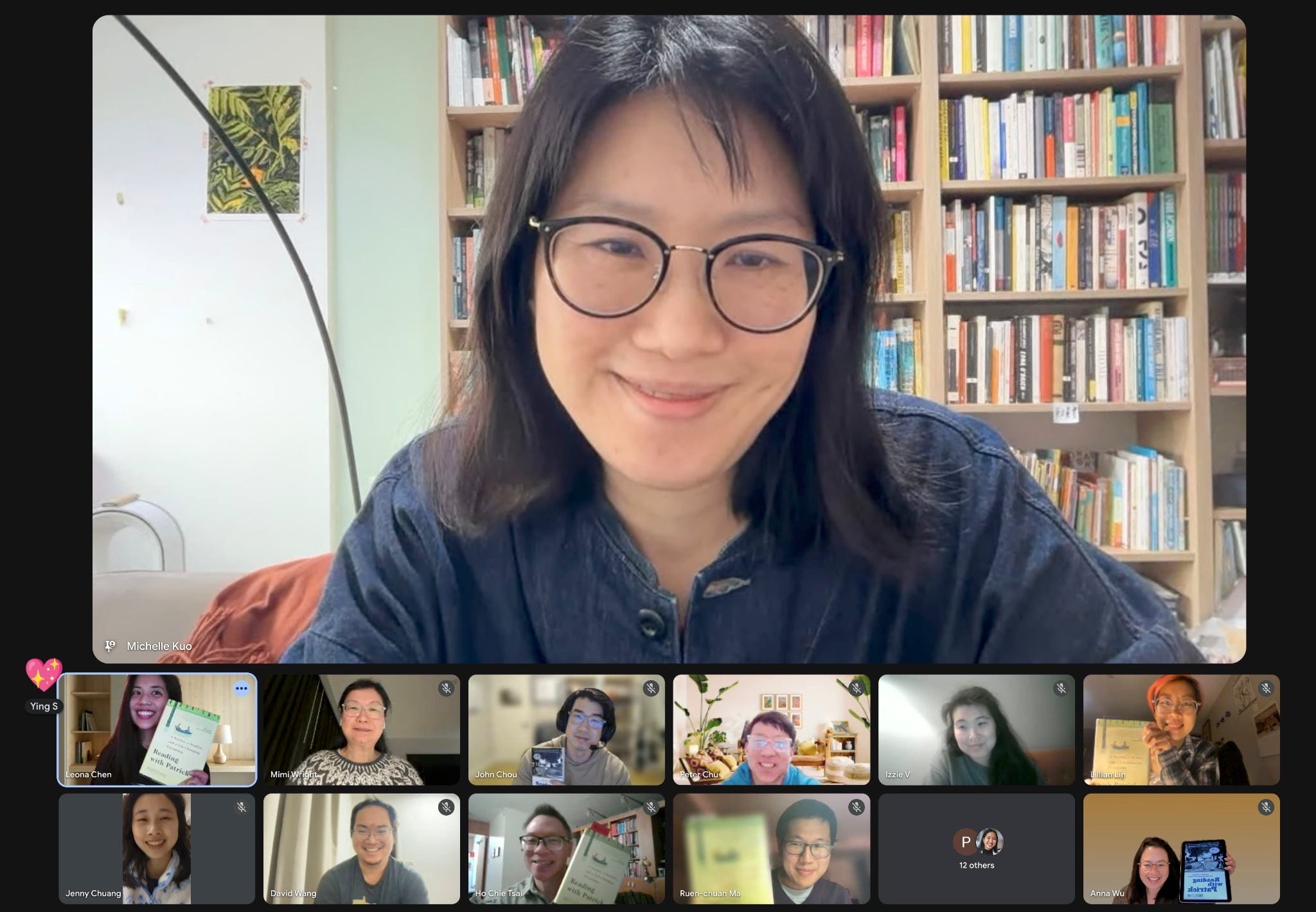
I (Michelle) spoke to the Taiwanese American book club this week about my book Reading with Patrick, hosted by the visionary Leona Chen, editor-in-chief of TaiwaneseAmerican.org. It was moving to talk to thoughtful readers who shared their own life paths. (So cool to see so many educators in one group, too.) Still thinking through the questions of one reader who, wondering of the influence his parents had on him, asked “how many of my choices were really my own” and what it would feel like to discover one’s true vocation.
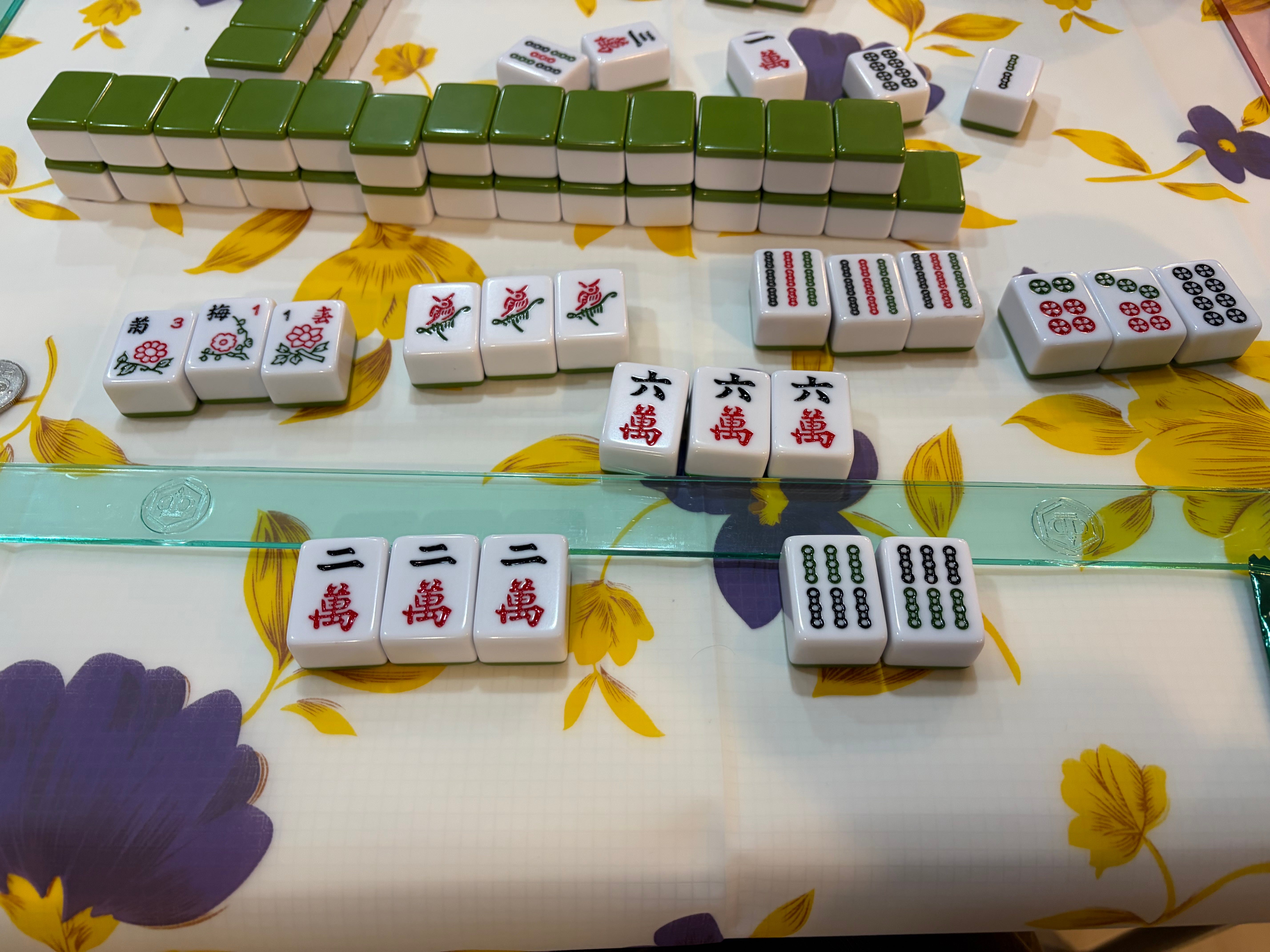
We also played a good deal of mahjong with family. We tried to teach our daughter how to play but she was more into YoutubeKids. (Groan, are we terrible parents?)
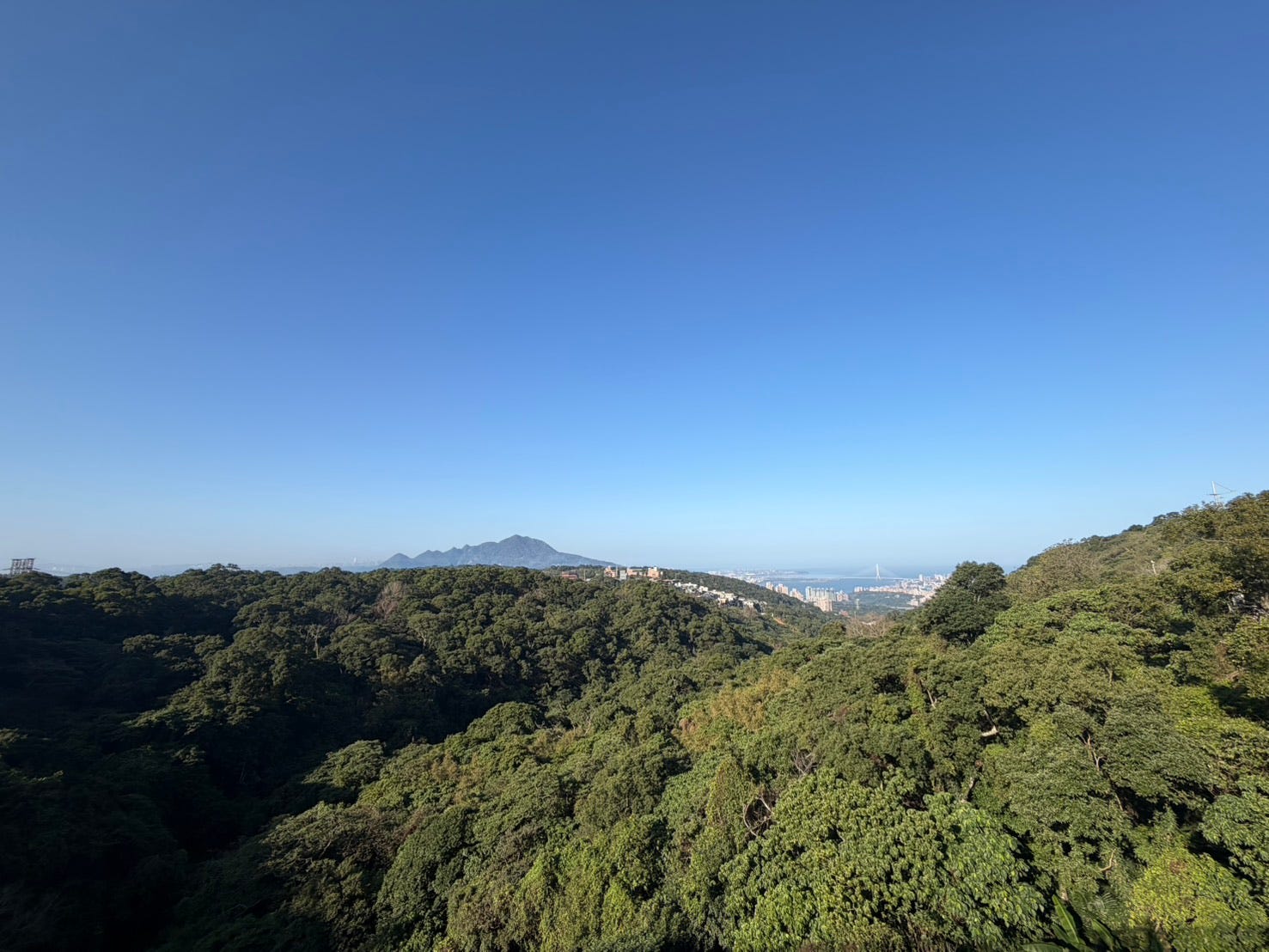
Albert has gotten super obsessed with biking and took a morning ride with his childhood friend Ken. Here’s a gorgeous view of where the Tamsui River hits the Taiwan Strait:
Ah, we’re back to work tomorrow, alas! Happy New Year everyone and stay safe out there. Sending all our love and hugs.
Book Club: Percival Everett’s James
On March 6th / 7th (Friday, 7 PM EST), we’ll read Percival Everett’s James. On April 24th / 25th (Friday, 7 PM EST / Saturday, 7 AM Taiwan time), we’ll read Niall Williams’s This is Happiness. On May 29th (Friday 7 PM EST), Darin Strauss’s Half a Life; and, on June 26th (Friday 7 PM EST), we’ll read Omar El Akkad’s One Day, Everyone Will Have Always Been Against This. After that, we’re reading Diana Athill’s Stet, Ferrante’s My Brilliant Friend, Kiran Desai’s The Loneliness of Sonia and Sunny, and Anuk Arudpragasam’s A Passage North. Thanks to our book club members for their suggestions! Please reply to this email for a zoom link.
Thank you, dear Michelle and Albert, for this ebullient post. It casts happiness forward into today. Spring is showing timid signs of starting here in NW Arkansas (I'm not going for the "false spring" I hear this phenomenon called, I KNOW it will frost hard exactly when the peach and cherry blossoms have come out) -- SCOTUS has finally shown that it will, after all, stand up when the (business) conditions are right . . . . things **might** be looking up. I'm looking up (carefully. I'm an Ox). Hugs! --Anita
Just love this post! And love the fact that a book fair is such an event!